Core Attributes
| Chinese | 天同 |
|---|---|
| Pinyin | Tian Tong |
| English | Heavenly Unity |
| Archetype | The Joy |
| Element | Yang Water |
| Category | Major |
Personality & Temperament
Tian Tong people are the easy company of the chart: warm, cheerful, genuinely kind. The texts describe a childlike openness — a soft face, a sweet temper, a way of getting along with everyone. They are peacemakers by instinct, allergic to confrontation, gifted at making others comfortable. In a system of ambitious stars, Heavenly Unity is the one that knows how to rest.
The gift is resilience through delight. The tradition is explicit that Tian Tong's fortune is hard-won: hardship first, happiness later — a sweet life that ripens with age. Its people find pleasure in small things, keep their humor under pressure, and often receive help precisely because they give none of the usual friction. It is also the most creative of the gentle stars: music, food, art, play come naturally.
The shadow is ease without effort. The tradition names it plainly: laziness (懒). Tian Tong people can be passive, dependent, quick to postpone; comfort becomes a cage, and the talent for harmony becomes a talent for avoidance. The texts say the star needs pressure — an inauspicious star or a demanding position acts as fuel, converting the child into someone who finally acts. Left soft, it drifts; pressured, it wins. The classical name for the pattern is sweet after bitter (先苦后甜): the happiness is durable precisely because it was earned.
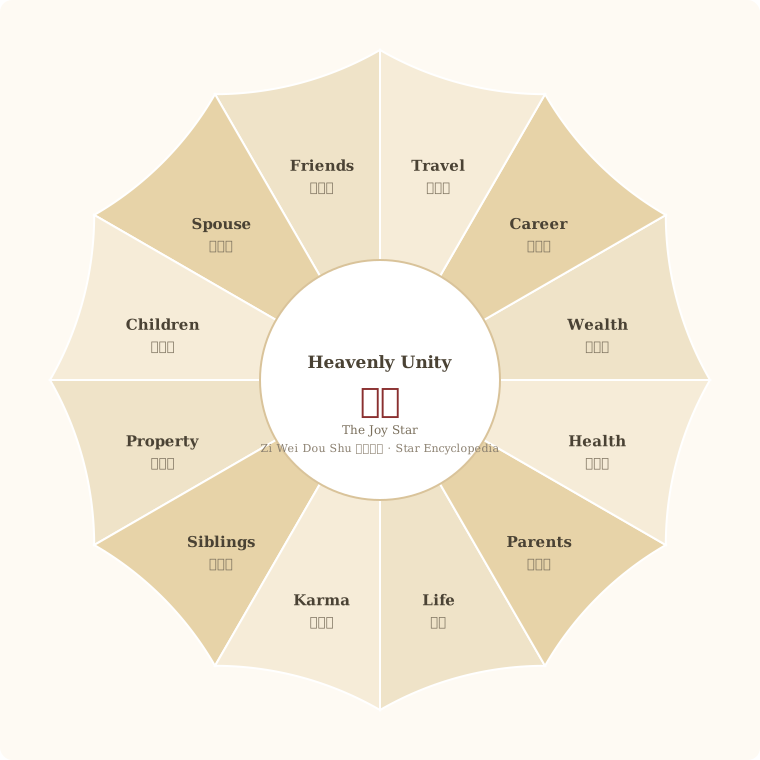
Heavenly Unity in the Twelve Palaces
| Palace | Meaning |
|---|---|
| Life | Warm, gentle, likable — others relax around this person instantly. Strong positions grant popularity and grace; the task is finding the motivation that comfort does not provide. The charm is genuine; the drift is the only flaw. |
| Siblings | Close, affectionate siblings who get along well; in strong positions the texts count many. The family is a soft landing place, sometimes to the point of dependency. Support is abundant, initiative less so. |
| Spouse | A tender, good-natured partner; the relationship is affectionate and conflict-averse. The tradition advises later marriage, since youthful unions under this star tend to drift; with the Moon it is the most romantic pairing in the chart. |
| Children | Warm, cheerful children who are a pleasure to raise; the bond is playful rather than stern. In weak positions, children inherit the easygoing nature — and sometimes the reluctance to strive. |
| Wealth | Comfort rather than fortune: enough, and the enjoyment of it. Wealth arrives late, through help as often as through effort. Strong positions grant a life of ease; weak ones teach thrift the hard way. |
| Health | Generally soft and pleasant: the texts promise longevity and resilience, with illness more often from indulgence than from strain. Diet, rest, and laziness are the watchwords — not overwork. |
| Travel | Pleasant journeys and change of scene; travel suits the Joy star's curiosity and love of novelty. The classical caution is the wandering pattern — many moves, few roots, unless a career anchors it. |
| Friends | A wide, easy circle that enjoys this person's company; help arrives without being asked. The tradition notes that Tian Tong attracts caretakers — and must guard against leaning on them too long. |
| Career | Best in warm, low-pressure work: the arts, hospitality, education, entertainment, service, public care. Tian Tong achieves through likability and talent, not combat; with pressure nearby, it becomes surprisingly capable. |
| Property | A comfortable, pleasant home — cozy rather than grand. Property is often acquired later in life or with help; in weak positions, family land fades and the person rebuilds at leisure. |
| Fortune | The natural seat of the Joy star: a rich inner life, genuine contentment, the gift of finding happiness anywhere. The classical picture of the person who is poor in purse and rich in spirit. |
| Parents | Gentle, caring parents who dote on the native; the bond is affectionate and protective. In weak positions, the texts note, the parents' softness becomes a comfort the native must eventually leave. |
Star Brightness Levels
Brightness (庙旺平陷) describes how strongly Heavenly Unity expresses in each palace position. The table below follows the traditional brightness table of the Zi Wei Dou Shu Quan Shu (紫微斗數全書), as compiled in Zi Wei Dou Shu Jing Cheng (紫微斗数精成). Some schools vary.
| Level | Chinese | English | Palaces |
|---|---|---|---|
| Miao | 庙 | Temple | 卯, 巳, 亥 |
| Wang | 旺 | Prosperous | 子, 申 |
| Li | 利 | Beneficial | 寅, 戌 |
| Ping | 平 | Neutral | 辰, 酉 |
| Bu De Di | 不得地 | Unobtained | 丑, 未 |
| Xian | 陷 | Fallen | 午 |
Heavenly Unity reaches its temple (庙) in Mao, Si, and Hai, thrives (旺) in Zi and Shen, is useful (利) in Yin and Xu, balanced (平) in Chen and You, falls (陷) in Wu, and is at its worst (不得地) in Chou and Wei.
Key Star Combinations
- Tian Tong + Moon (天同太阴): The most tender pairing in the chart: joy and beauty together — romantic, artistic, deeply attuned to feeling. Strong positions produce charm, creativity, a blessed life. The classical note is the lazy bliss: both stars love ease, so pressure from other stars is what turns the pair into achievement. The texts recommend it for artists, and it softens the whole chart wherever it sits.
- Tian Tong + Great Gate (天同巨门): The sweet star with the dark star: inner worry beneath a pleasant face. The texts call this the hidden grief (隐痛) — an emotional, verbal person who laughs easily and swallows much. Strong positions: a gifted communicator, writer, or host. Weak ones: a sea of swallowed disputes.
- Tian Tong + Heavenly Beam (天同天梁): Two fortune stars together — the classical pair of blessings, longevity, protection (福荫). Life under this pairing is marked by narrow escapes: danger that arrives and passes, harm that misses. It suits healing, teaching, care. The warning is only its shared passivity: both stars wait for luck instead of making it.
- Tian Tong + Blade Star (天同擎羊): The classical paradox: the softest star sharpened by the sharpest blade. Pressure turns Heavenly Unity's comfort into fuel — the famous 'Horse-Head with Sword' pattern (马头带剑) when combined with the Moon in Wu: hardship endured, then authority won. The tradition's rule: Tian Tong with one stern companion achieves what pure Tian Tong never does.
Heavenly Unity and the Four Transformations
Heavenly Unity transforms in three directions: Prosperity in Bing years, Authority in Ding years, and Obstruction in Geng years. It never takes Recognition (化科) — the classical logic being that its fortune is natural rather than earned, and needs no public certificate.
Hua Lu (化禄 — Transformation to Prosperity)
Tian Tong Hua Lu (化禄) in a Bing year deepens the blessing: pleasure, harmony, and good fortune arrive easily — hospitality, enjoyment, and help from others. The caution is the paradox of the Joy star: the more comfortable the year, the less the native moves; prosperity without effort can quietly postpone the life plan.
Hua Quan (化權 — Transformation to Authority)
Tian Tong Hua Quan (化权) in a Ding year gives the easy star a spine: the gentle peacemaker learns to take charge. This is the classical remedy for Tian Tong's laziness — authority forces action, and the native who never fought finally competes, often surprising everyone, including the self.
Hua Ji (化忌 — Transformation to Obstruction)
Tian Tong Hua Ji (化忌) in a Geng year is the joy star's bad day: dissatisfaction, emotional turmoil, and the collapse of the usual defenses. The tradition notes the paradox too — Hua Ji is the sharpest spur Tian Tong can receive, and in strong charts it converts comfort into genuine accomplishment after a season of distress.
Classical Source
天同属壬水,象阳,南斗第四星,化气为福,为福德主。益寿保生,逢凶化吉,无破定为吉祥,会吉寿长。……天同入男命吉凶诀:天同庙旺福寿长,逢吉聪明誉传扬,失陷合煞多为凶,机月梁会宜空门。
Tian Tong belongs to Yang Water, is the fourth star of the Southern Dipper, and transforms into fortune: it is the lord of the Fortune Palace. It extends life and preserves health, turning danger into safety — unbroken it is auspicious, and with auspicious stars it grants long life. Verse for Tian Tong in a man's chart: In temple positions Tian Tong brings long fortune and life; with auspicious stars, intelligence and renown spread far; fallen with baleful stars it turns unlucky, and with the Mechanic, Moon, and Beam it leans toward the contemplative life.
Common Questions
Is Tian Tong really a lucky star?
Yes, with a qualifier: its fortune is real but deferred. The tradition says Tian Tong experiences hardship first and blessing later — the child of difficulties who grows into the elder at ease. It converts danger into safety and grants longevity, but it rarely makes things happen by itself; its luck arrives as protection, help, and late reward rather than early victory. The verse says it plainly: Tian Tong in temple positions, long fortune and long life.
Why is Heavenly Unity called lazy?
Because its nature is enjoyment, and enjoyment prefers rest. The texts are frank: Tian Tong people postpone, depend, and drift when unpressured. The remedy is built into the system — a demanding star, a stern position, or Hua Ji acts as the spur that converts the easygoing child into someone who acts. Soft stars multiply the sweetness; pressure multiplies the achievement.
What does Tian Tong Hua Ji (化忌) mean?
In a Geng year the Joy star's comfort breaks: moodiness, emotional disturbance, disappointment, the feeling that the usual warmth has gone cold. Ironically, the tradition also treats this as the strongest activating force Tian Tong can receive — after the distress passes, the native who was pushed is often more capable than the one who was never pushed at all. For a Tian Tong native, the Hua Ji year is best survived by staying busy — idleness magnifies the gloom.
What careers suit Heavenly Unity?
Warm, low-pressure, human work: the arts, music, food and hospitality, education, entertainment, care and counseling, public service. Tian Tong wins through likability, taste, and timing rather than combat. The texts add the pattern of the blessed official — with the right pressure nearby, it governs competently and enjoys the journey. One rule: joy must be part of the job. A Tian Tong who hates the work will not do it.
How is Tian Tong different from the Moon?
Both are gentle and pleasure-loving, but the Moon is private and self-contained while Heavenly Unity is social and childlike. The Moon savors beauty alone; Tian Tong shares the feast. In the tradition's phrase: the Moon enjoys self-indulgence, Tian Tong enjoys company — which is why they pair so well and why each needs different medicine.
Related Stars
Explore how Heavenly Unity works with other stars: