Core Attributes
| Chinese | 寡宿 |
|---|---|
| Pinyin | Gua Su |
| English | Widow Star |
| Archetype | The Widow |
| Category | Minor |
Personality & Temperament
The Widow Star describes an inward, self-contained temperament: quiet, serious, and happiest in a room of one's own. The person thinks before speaking, prefers depth over breadth in friendships, and often works as a quiet strategist, someone whose good judgment is noticed late rather than applauded early. Classical texts praise the diligence and persistence of this nature, and note a natural affinity for philosophy, meditation, and the religious life.
The star's role in the chart is to mark where emotional reserve becomes a pattern. It often appears in the charts of people who marry late, keep deep personal space in marriage, or find fulfillment in solitary pursuits. The classical reading softens considerably when strong main stars accompany it: reserve, not isolation.
The shadow is reserve that hardens into suspicion. Old texts describe a tendency to criticize others' work, to nurse grievances quietly, and to assume the worst of goodwill; a proud, wary edge can push people away faster than loneliness intends. As with its pair star, the weight of these readings depends on the main stars present. The Widow Star describes the pattern of withdrawal; the rest of the chart decides whether it reads as sanctuary or loneliness.
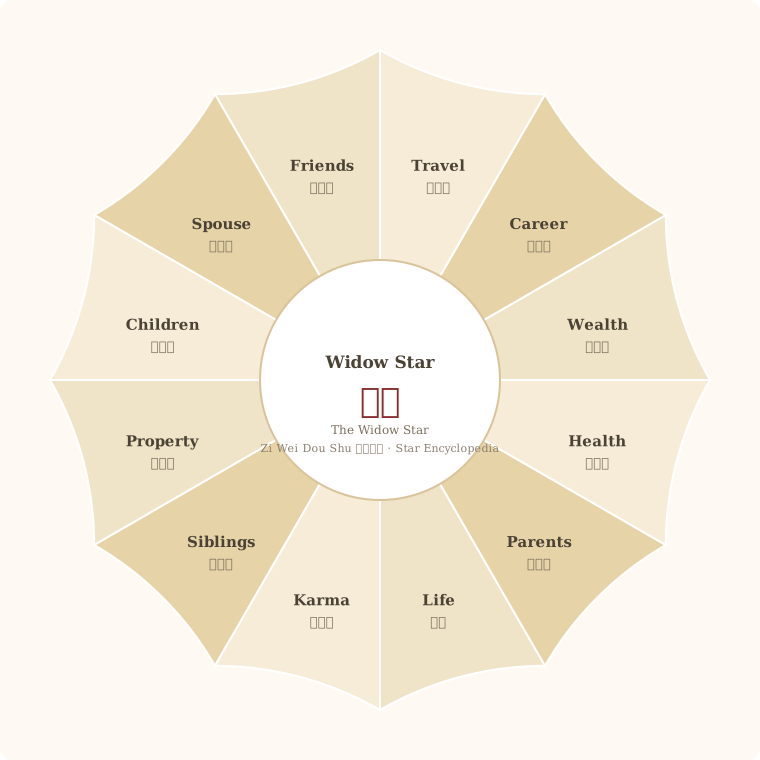
Widow Star in the Twelve Palaces
| Palace | Meaning |
|---|---|
| Life | A serious, self-sufficient person who treasures private time. Social energy is conserved and spent selectively; meditation, study, or solitary craft often fills the hours others spend socializing. |
| Spouse | Late marriage and a relationship with generous personal space. Affection is shown through steadiness rather than words; the bond survives best when both partners respect quiet. |
| Travel | Journeys taken alone or to quiet places - retreats, temples, natural settings. The traveler seeks stillness rather than spectacle. |
| Friends | Few companions, trusted deeply. The person is loyal but slow to open up; large gatherings drain rather than refresh. |
| Career | Careful, independent work: analysis, planning, research, or any role requiring sustained concentration. Judgment is sound but understated, and recognition tends to arrive late. |
| Fortune | Strongly favors contemplative life: meditation, study of classical texts, or spiritual practice as the deepest source of satisfaction. Solitude here is a well, not a wall. |
Key Star Combinations
- Widow Star + Solitary Star (寡宿孤辰): The full solitude pair. Together they intensify late marriage, emotional distance, and a life organized around independence. The classical framework adds affinity for religion and philosophy. With warm main stars this reads as a dignified private life; with austere ones, the texts speak of separation and long solitary stretches.
- Widow Star + Canopy (寡宿华盖): A strong contemplative signature: talent for esoteric study, original thought, and a natural turn toward religion, astrology, or meditation. Late marriage is common, and the person may feel most alive in solitary learning. The combination prizes inner cultivation over social standing.
- Widow Star + Martial Music or Heavenly Beam (寡宿武曲天梁): Austere main stars switch on the star's heavy reading: emotional restraint in family life, marriage at a distance, and a capacity to endure long stretches alone. The same combination produces remarkable steadiness in hardship, the person who carries on quietly when others would break.
Common Questions
Does the Widow Star mean I will become a widow or widower?
No. The name comes from the classical marriage framework, which equated solitude in later life with widowhood, but the star itself describes a pattern of reserve, late marriage, and personal space. Modern reading treats it as a temperament marker: quiet, self-sufficient, and happiest with room to breathe. Its weight depends entirely on the main stars around it.
How is the Widow Star different from the Solitary Star?
They are paired but different in flavor. The Solitary Star is the restless loner, proud, active, and happiest on the road or outdoors. The Widow Star is the still one, inward, contemplative, and happiest alone in a quiet room. One is the loneliness of motion; the other, the loneliness of stillness.
Can this star be read positively?
Yes, and easily. The same traits that classical texts feared, reserve, independence, detachment, are the foundation of deep work, meditation, scholarship, and self-reliance. With helpful stars alongside, the Widow Star marks a person of quiet depth whose solitude is strength, not lack.
Related Stars
Explore how Widow Star works with other stars: