Core Attributes
| Chinese | 亡神 |
|---|---|
| Pinyin | Wang Shen |
| English | Death Spirit |
| Archetype | The Death Spirit |
| Category | Year Deity |
What Death Spirit Means
In the fixed order of the Twelve Preceding Generals (Jiang Qian Shi Er Shen), stepping forward from the General Star at the pivot branch of the birth-year trine, the Death Spirit holds the twelfth and final position, one palace before the cycle returns to the General Star. Classical texts class it as the star of defeat and loss: legal disputes, damage to wealth, loss of momentum, and difficulty for the head of the household, all softened by auspicious stars; with the sharp adversity stars it is associated with lost objects. The name is the strongest in the cycle, and the classical framework deliberately reads it as dissipation rather than destruction: things do not shatter under the Death Spirit, they quietly run down — energy, money, drive, and old arrangements that have reached the end of their useful life. Its position at the end of the sequence is its real meaning. The Twelve Preceding Generals form a closed loop, and the Death Spirit is the closing chapter: a year or palace domain that asks for endings done well — debts settled, accounts closed, commitments concluded — so that the cycle can begin again at the General Star. It is the yearly cycle's janitor, not its executioner.
Death Spirit in Practice
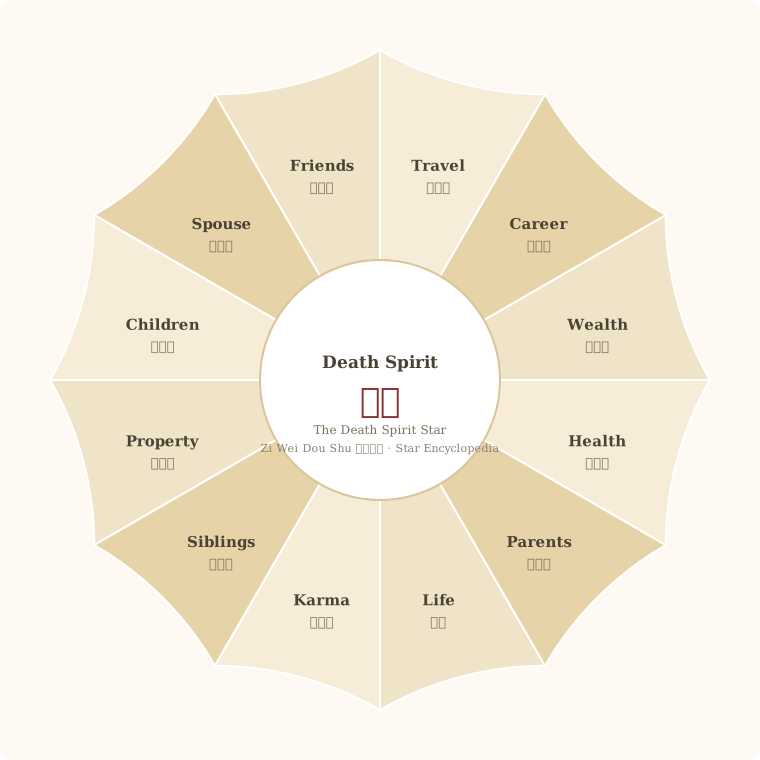
In practice the Death Spirit favors closure in its palace. In the Wealth palace it asks for settled accounts and the end of fading investments; in the Career palace it supports finishing projects and clean exits rather than new launches; in the Life palace it colors a low-energy year best used for rest, clearing, and preparation; with the Official Charm the legal theme deserves attention. With Hua Lu the ending pays — final settlements arrive; with Hua Ke the ending is honorable and remembered; with the Robbery Star or the Disaster Star the classical adversity pairing stacks and asks for careful records. The practical rule is to let things end on schedule: the star's gift is that it marks what should be closed, before the new cycle demands the space.
Key Star Combinations
- Death Spirit + Robbery Star (亡神+劫煞): The classical loss pairing: depletion of resources and momentum in the same palace. The reading favors settled debts, protected valuables, and no new commitments until the cycle turns.
- Death Spirit + Official Charm (亡神+官符): The document theme of the closing star: disputes, contracts, and legal matters that want closure. The classical advice is professional, written, and early handling.
- Death Spirit + Hua Ke (亡神+化科): An ending with honor: retirement, graduation, settlement, or completion that is publicly acknowledged. Hua Ke turns the closing chapter into a good reputation for the one who closed it well.
Common Questions
Does the Death Spirit predict death?
No. The character wang means dissipation and loss — momentum spent, resources drained, matters closed — and the classical texts attach it to disputes, lost wealth, and lost objects, not to mortality. Modern yearly readings treat it as the cycle's closing chapter: a season for endings, settlement, and preparation.
Why is the last star of the cycle a difficult one?
Because every cycle ends with depletion before renewal. The sequence builds from the General Star's authority, peaks in movement and talent, runs through the warning stars, and closes with the Death Spirit — the quiet before the General Star begins again. Read in that frame, its difficulty is seasonal, not fatal.
Related Stars
Explore how Death Spirit works with other stars: