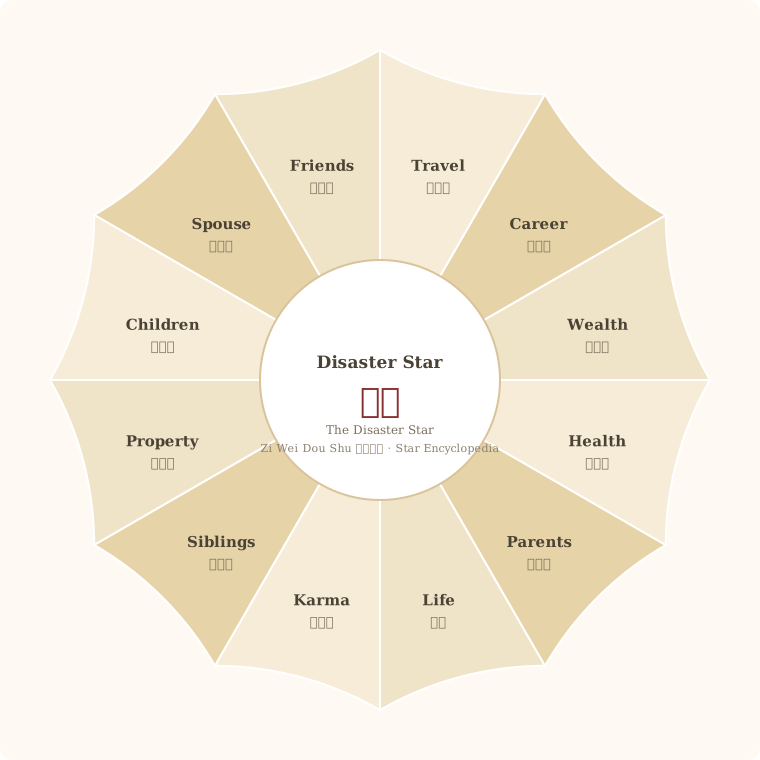
Core Attributes
| Chinese | 灾煞 |
|---|---|
| Pinyin | Zai Sha |
| English | Disaster Star |
| Archetype | The Disaster |
| Category | Year Deity |
What Disaster Star Means
In the fixed order of the Twelve Preceding Generals (Jiang Qian Shi Er Shen), which steps forward one palace per star from the General Star at the pivot branch of the birth-year trine, the Disaster Star holds the seventh position. Classical texts describe it as the star of calamity: unexpected troubles, illness, and harm; it dislikes the Life palace and the body palace, finds relief in auspicious stars, and is associated with damage through petty people or through illness that empties the purse. The key word is unexpected: unlike the Robbery Star, which flags loss, the Disaster Star flags surprise — the event that was not in the plan, whether a health scare, a breakdown, an accident, or a sudden reversal. The classical framework treats it as a reminder star rather than a ruling. Its strength is set entirely by the palace, the main star, and the transformations: with the Heavenly Beam (the star of rescue) it becomes a scare that resolves; with Hua Ji it concentrates; with strong auspicious stars it fades to a minor interruption. The year cycle includes it precisely so that the palace it touches is handled with margins — reserves, checkups, and backup plans.
Disaster Star in Practice
In practice the Disaster Star marks the palace that deserves margins in the year cycle. In the Health palace it favors a checkup year and disciplined rest; in the Wealth palace it warns against leveraged or rushed financial decisions; in the Life palace it asks for care in the ordinary risks of daily life; in the Travel palace, for itineraries with slack. With the Heavenly Beam the classical reading is rescue and relief; with White Tiger the traditional caution strengthens; with Hua Lu the surprise usually arrives with a silver lining. The practical rule is defense with a time limit: give the palace twelve months of extra care, not a lifetime of fear.
Key Star Combinations
- Disaster Star + Heavenly Beam (灾煞+天梁): The classical rescue pairing: the Heavenly Beam dissolves disasters and turns them into scares. A year that tests the palace but ends in relief, with the experience leaving useful lessons.
- Disaster Star + White Tiger (灾煞+白虎): The traditional adversity pairing: unexpected harm and pressure stacked in one palace. The reading is not prophecy but emphasis — this palace deserves the year's best margins.
- Disaster Star + Hua Ji (灾煞+化忌): Surprise plus friction: the unexpected arrives in a year already tight. The classical advice is early and quiet handling — fix small problems before they become the story.
Common Questions
Is the Disaster Star a prediction of disaster?
No. It is a yearly reminder that the palace it touches is the year's least predictable area. Its classical profile is unexpected trouble, but every classical text also gives the relief conditions: auspicious stars, rescue stars, and careful conduct soften it to a minor interruption.
Why does it dislike the Life palace?
The Life palace is the personal core of the chart, and classical texts read sudden trouble there as the most direct blow. In practice this means a year to manage routine risks carefully — health, habits, impulsiveness — not a year to hide indoors.
Related Stars
Explore how Disaster Star works with other stars: