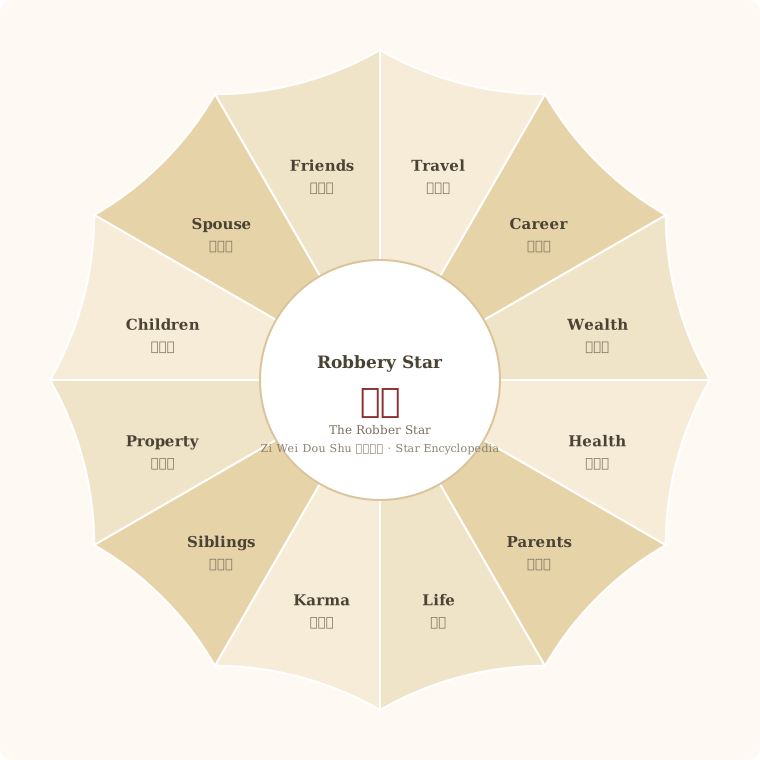
Core Attributes
| Chinese | 劫煞 |
|---|---|
| Pinyin | Jie Sha |
| English | Robbery Star |
| Archetype | The Robber |
| Category | Year Deity |
What Robbery Star Means
The Twelve Preceding Generals (Jiang Qian Shi Er Shen) step forward from the General Star at the pivot branch of the birth-year trine, and the Robbery Star occupies the sixth position, always a travel palace of the trine. Classical texts describe it as the star of robbery and loss: damage to wealth, theft, misplaced belongings, harm to young children, illness, and difficulty, all softened by auspicious stars in the palace. Its name is stronger than its nature. In the yearly framework the Robbery Star is a reminder star: it flags the palace where losses are most likely to find a channel in that person's annual cycle — money that goes missing, deals that leak, valuables that wander, and small oversights that compound. It does not announce a robbery; it announces a year of heightened attention in that palace's domain. Its shadow is the shadow of carelessness: the classical texts warn that without good stars the person meets loss through his own loose ends rather than through villains. The framework therefore reads it as a discipline star — records kept, doors locked, documents filed, and large sums handled with ceremony.
Robbery Star in Practice
In practice the Robbery Star asks for defensive management in its palace. In the Wealth palace it favors a conservative financial year: fewer risky deals, clearer records, no forgotten accounts; in the Travel palace, care with luggage, documents, and valuables; in the Life palace, restraint in impulsive spending and impulsive promises. With the Prosperity Star or Hua Lu the loss is contained and often offset by larger gains; with the Great Drain it doubles into a year of visible depletion; with the sharp stars Qing Yang or Tuo Luo, competitive losses and disputes over money. The practical rule: assume the year will test your grip on this palace, and grip it first.
Key Star Combinations
- Robbery Star + Great Drain / Small Drain (劫煞+大耗/小耗): The depletion signature of the yearly cycles: loss themes stacked in one palace. The classical reading is a year for defensive finance — clear records, cautious lending, no open accounts.
- Robbery Star + Prosperity Star / Hua Lu (劫煞+禄存/化禄): Gain with leakage: income flows strongly, but money passes through the hands quickly. The classical advice is to convert flow into fixed assets, since the star tests whatever is left loose.
- Robbery Star + Qing Yang / Tuo Luo (劫煞+擎羊/陀罗): Loss through friction and rivalry: disputes over property, aggressive competition, or delays that cost money. The texts note the pair weakens persistence — many undertakings begun, few completed.
Common Questions
Does the Robbery Star mean I will be robbed?
No. It is a yearly reminder star that flags the palace where loss is most likely to find a channel. With good stars or transformations the risk is minor and contained; the value of the star is that it tells you where to keep records and attention.
Why is it called robbery if it also covers small losses?
The classical name covers the whole family of loss: theft, misplacement, leakage, and depletion. The yearly reading uses the strong name to make the soft warning memorable — guard this palace's resources.
Related Stars
Explore how Robbery Star works with other stars: