Core Attributes
| Chinese | 天使 |
|---|---|
| Pinyin | Tian Shi |
| English | Heavenly Messenger |
| Archetype | The Messenger |
| Category | Cycle Deity |
What Heavenly Messenger Means
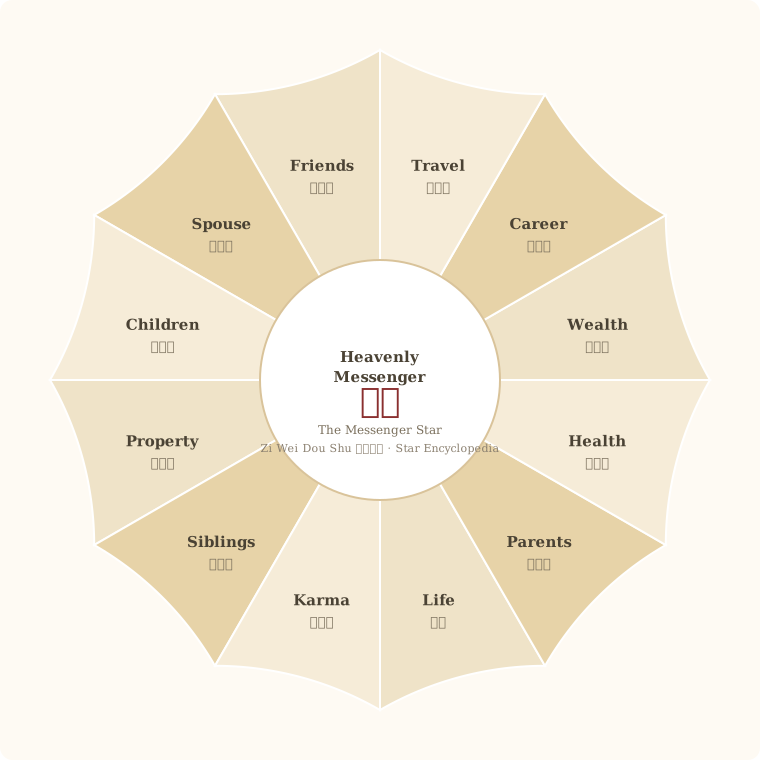
The Heavenly Messenger is fixed in the Health Palace of every chart; its partner, the Heavenly Wound (Tian Shang), is fixed in the Friends Palace. Together they clamp the Travel Palace between them, forming the classical pattern called wound and messenger flanking the limit (Shang Shi Jia Xian). The Messenger's register is sudden illness and unexpected ailment, the sickness member of the pair, while the Wound governs depletion and injury. Old texts list the two as middle-tier stars whose force appears mainly in fortune periods (Da Xian) and yearly readings: when a limit or year reaches the clamped Travel Palace, or when the star's own palaces are activated by an adverse period, the reading asks for caution with health and sudden events. The same texts give the balancing rule in one line: with many auspicious stars and no adversity, the harm is light; with a weak main star, harsh palaces, and a transformation of obstruction, they expect genuine trouble. Because the pair's positions are fixed, every chart contains them; the art of reading lies in the timing, which periods and years touch the clamped palace, not in the mere presence of the star.
Heavenly Messenger in Practice
In practice the Messenger is read through timing and support. When a fortune period or year activates the clamped Travel Palace or the Health Palace, favor regular checkups, rest, and caution with sudden changes of plan; the classical texts mention unexpected ailments and mishaps arriving sideways. In the Health Palace itself, the star colors the health reading with sudden-onset complaints, flu, accidents, acute episodes, rather than chronic conditions, and its weight falls sharply when auspicious stars guard the palace or its three directions. The textbooks also note that with the Literary Star or Literature Music present, the caution extends to injuries from haste. The practical posture is the same as its partner's: inspect the main stars and transformations of the relevant period before assigning the star any weight.
Key Star Combinations
- Heavenly Messenger + Heavenly Wound (天使天伤): The fixed pair clamping the Travel Palace. Their combined activation is the strongest reading in the pair's system: a fortune period entering the Travel Palace with weak main stars and adversity. With auspicious support in the three directions, the textbooks call the period saved.
- Heavenly Messenger + Transformation of Obstruction (天使化忌): The sharpest activation of the star's caution theme: a year with Hua Ji touching the Health or Travel area favors rest, checkups, and avoiding sudden risks. With a strong main star it reads as a rough season, not a disaster.
Common Questions
Does the Heavenly Messenger predict accidents?
It describes a caution window, not a prediction. Classical texts say its force appears mainly in fortune periods and years, and explicitly state that strong auspicious support makes the harm light. The reading is about timing and prudence, not fate.
What is the difference between the Wound and the Messenger?
The Wound (Tian Shang) governs depletion, injury, and mishap; the Messenger (Tian Shi) governs sudden illness and unexpected ailment. Both are fixed, in the Friends and Health palaces respectively, and both act mainly when periods activate the clamped Travel Palace.
Related Stars
Explore how Heavenly Messenger works with other stars: