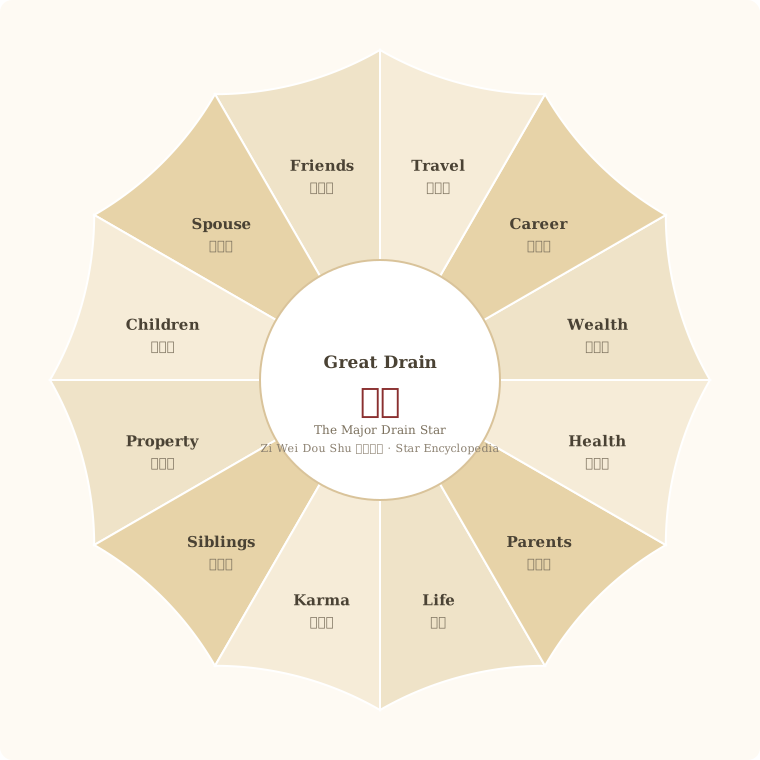
Core Attributes
| Chinese | 大耗 |
|---|---|
| Pinyin | Da Hao |
| English | Great Drain |
| Archetype | The Major Drain |
| Category | Year Deity |
What Great Drain Means
The name 大耗 means “great drain,” and the classical framework assigns it declining inheritance (退祖) and breaking and ruin (破败): the year's segment of major resource loss. Older texts picture property and capital flowing out — inheritance spent, ventures failing, estates declining. The drain is named for scale, not for intent: what leaves may be spent, lost, or transferred. Great Drain is seventh in the sequence, six palaces after the Grand Duke in the forward branch order, which for a Zi (Rat) year places it in Wu, directly opposite the year lord. What it governs is the large single outflow rather than many small ones: a big purchase, medical costs, business restructuring, relocation, or a financial setback. Its shadow is overcommitment, betting the reserves on one move. Its neutral face is simply expenditure: with auspicious stars or a strong wealth structure, the drain becomes a funded project — costly, but a deliberate investment. The classical posture is respect: measure the flow before the season arrives.
Great Drain in Practice
Find the palace of the Great Drain and audit your exposure there. In Wealth or Property, it urges insurance, an emergency fund, and no all-in decisions; in Career, restructuring and severance budgets; in Health, high medical costs. With Hua Ji added, the outflow tightens and deserves explicit planning; with Lu Cun, the treasury star, losses stay survivable. The classical counsel is to fill the reserves before the sector arrives, so the drain becomes a budget line instead of a shock.
Key Star Combinations
- Great Drain + Lu Cun (禄存): The Treasury star cushions the outflow: losses occur, but reserves absorb them and recovery is steady. The drain becomes a budgeted cost rather than a wound.
- Great Drain + Hua Ji (化忌): The heaviest leakage signature: a major outflow tied to worry, debt, or failed expectations. Readers advise freezing large commitments in this palace's domain until the picture clears.
Common Questions
Is the Great Drain only about money?
Primarily resources: capital, property, and time. The palace it occupies names the arena — Wealth and Property for money, Health for medical costs, Family for elder care. Its weight is set by the main stars and transformations.
Does the Great Drain always mean loss?
It means major outflow. With a strong palace it reads as funded expenditure — a house, a surgery, a business pivot — that leaves cash thinner but not broken. The classical star is a discipline reminder: keep reserves, take big risks rarely.
Related Stars
Explore how Great Drain works with other stars: