Core Attributes
| Chinese | 恩光 |
|---|---|
| Pinyin | En Guang |
| English | Grace Light |
| Archetype | The Grace |
| Category | Minor |
Personality & Temperament
En Guang assists the Heavenly Noble (Tian Kui) and, with its partner Heavenly Nobility (Tian Gui), carries special honor and rank: a star of rewards and favor that raises reputation and draws tangible benefit - winning through help, passing examinations through sponsorship. In the Life Palace it describes an open, honest, optimistic person: generous without seeking thanks, loyal and studious, careful, with a literary streak - and a talent for being in the right place when someone above looks down.
Its signature is grace without begging: En Guang lets you borrow another's light - and the light comes to you on its own, unasked. Auspicious in all twelve palaces, it loves the Life and Career Palaces and is most fortunate with the Sun bright, where with the Left and Right Assistants it paints summons by high authority, special performance, and conferral - favorable for examinations. Wherever it sits, the influence of nobility develops there; flanking the Career Palace with Tian Kui and Tian Yue it was the classical seal of inheritance - read today as exclusive rights - and flanking the Wealth Palace, fame first, profit after.
The shadow is the borrowed light. The tradition ranks its force weaker and shorter-lived than Feng Gao's: the favor is real but the flame is not your own, and with harmful stars crowding the palace the grace 'finds no strength to rescue.' The profile adds dependence and pride - leaning on superiors, guarding appearances, letting borrowed brilliance substitute for skill. When the patron moves on, so does the light.
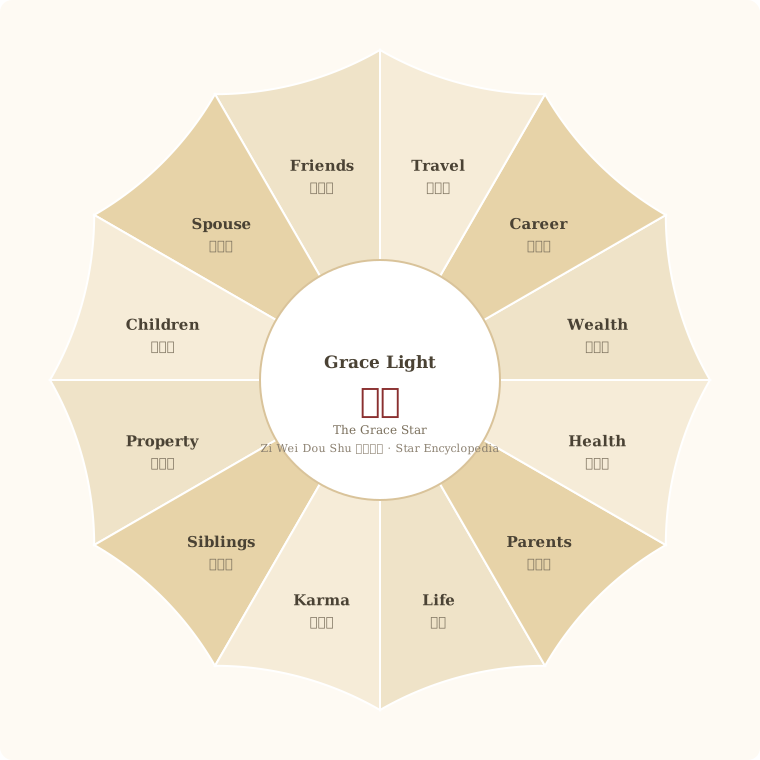
Grace Light in the Twelve Palaces
| Palace | Meaning |
|---|---|
| Life | Open, honest, and well liked, with a gift for attracting favor. Leans on superiors and elders; the borrowed light is real but must be tended. |
| Wealth | Benefits through others: rewards, sponsorship, and advantage won by help rather than trading. Flanking the Wealth Palace it reads as fame first, profit after. |
| Travel | Nobility develops where the star sits: favor and protection found abroad, often from senior or official people met on the road. |
| Friends | The circle of light: patrons, mentors, and influential acquaintances who raise you without being asked. The grace flows from this palace outward. |
| Career | The classical seat: promotion by patronage and notice from above. With a strong main star, summons, special assignments, and favors from the powerful; strong for examinations. |
| Fortune | The tradition says that meeting En Guang in middle and late years brings the courtesy of superiors - honors, invitations, and eased paths. The grace is real but the main star holds the frame. |
| Parents | An honored family base and an early record of favor: awards in school, attention from elders, and the first taste of being singled out. |
Key Star Combinations
- En Guang + Tian Gui (恩光天贵): The paired stars of grace and nobility: together they carry special honor, rank, and reward, and the texts say the pair must meet to have real force. They raise reputation and bring tangible benefit - passing examinations, winning through help - and are most auspicious with the Purple Star, the Emperor, the Sun, and the Moon.
- En Guang + Heavenly Noble (恩光会天魁): En Guang serves Tian Kui, and in the same palace it strengthens the Noble's hand: the patron becomes more present, the favor more visible, and the chart's nobility more public. This is the classical formula for protection from above.
- En Guang + Sun at its brightest (恩光会太阳庙): The tradition calls this the most fortunate meeting: with the Sun well placed, and the Left and Right Assistants added, it paints summons by high authority, special performance, and conferral - in modern terms, sponsorship from the top and a competition won by a visible hand.
- En Guang + Literary stars (恩光会昌曲): Favor aimed at scholarship: with Wen Chang and Wen Qu, the grace turns toward examinations and literary honors. The classical texts count this favorable for tests; the borrowed light becomes a scholarship, a recommendation, or a name that opens doors.
Common Questions
Does En Guang mean I will have powerful patrons?
It describes the pattern, not the promise: the tendency for help to arrive from above - notice, sponsorship, and favor - without begging. As a minor star it colors the main star, so the patron's presence and the benefit's size follow the palace's strength. With a weak main star, the same configuration describes borrowed light that cannot be kept.
How is En Guang placed in the chart?
En Guang is a day-based star: begin at the palace of the Literary Star (Wen Chang) as the first day of the lunar month, count forward clockwise to the birth day, and then step back one palace - the star lands there. Its expression depends on the main star sharing its palace.
What is the difference between En Guang and Feng Gao?
Both are stars of conferred grace - hidden virtue repaid through external help - but the tradition ranks Feng Gao's force larger and more lasting, and En Guang's weaker and shorter-lived. En Guang is the flash of favor, the timely hand; Feng Gao is the seal that stays stamped. And where Feng Gao assists the Right Assistant, En Guang serves the Heavenly Noble.
Related Stars
Explore how Grace Light works with other stars: