Core Attributes
| Chinese | 天魁 |
|---|---|
| Pinyin | Tian Kui |
| English | Heavenly Noble |
| Archetype | The Knight |
| Element | Yang Fire |
| Category | Six Auspicious |
Personality & Temperament
The Heavenly Noble describes a person who is presentable, honest, principled — the kind of junior that senior figures instinctively trust. The texts portray it as dignified, articulate, generous, good with people: quick to help others in difficulty, and a voice that carries weight in a room. This is the star of public favor — a knight whose reputation walks in before him.
Because it is a helper star, its gifts arrive through others: a respected teacher, a manager who sponsors you, a connection made at exactly the right moment. A lone Heavenly Noble is weak; with the Heavenly Axe in the same triad, patronage repeats — the classical formula called Sitting Noble Facing Noble (坐贵向贵). With the Literary Stars, Wen Chang and Wen Qu, it produces the scholar who rises by recommendation rather than self-promotion.
The shadow is dependence and pride. People under this star can wait for rescue instead of acting, or become known as the one who knows people rather than the one who does the work. The classics add two edges: a lone noble in the family palaces can double attachments, and after midlife, or amid many adverse stars, the patron can become the obstacle. The lesson: receive help, but never build your life on it.
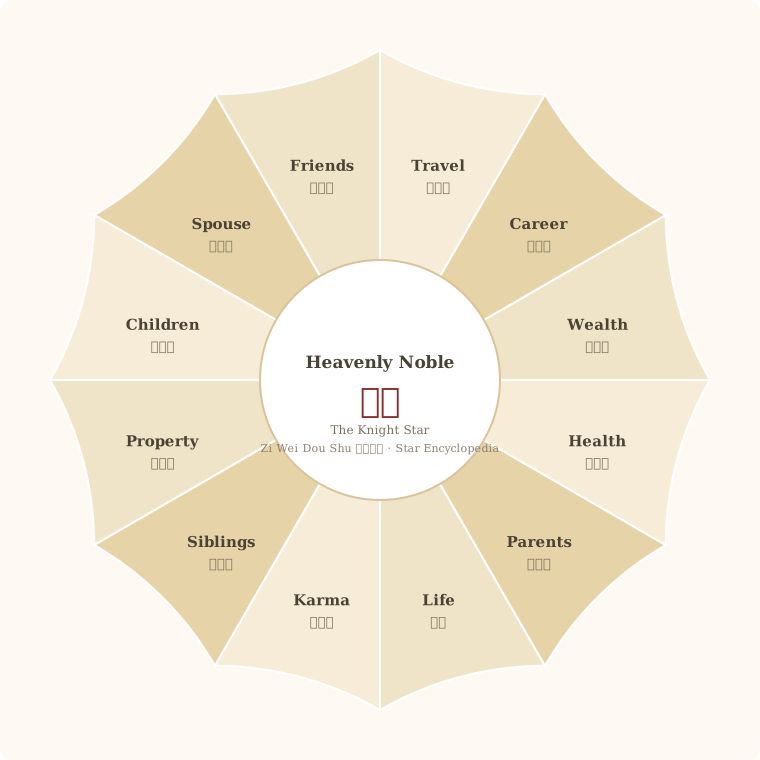
Heavenly Noble in the Twelve Palaces
| Palace | Meaning |
|---|---|
| Life | A presentable, principled presence that senior people instinctively trust. Natural eloquence and a generous habit of helping others. Public favor comes early; the risk is waiting for doors to open instead of pushing through them. |
| Siblings | Help arrives through siblings or in-laws — an older brother, a capable relative who opens doors. A lone Heavenly Noble here can double family ties: obligations to two households, or loyalties divided between them. |
| Spouse | A partner met through introductions — a friend, colleague, or elder who arranged it. The marriage carries social grace and mutual respect. A lone star here can complicate romance with overlapping attachments. |
| Children | Children who are capable and socially promising, often helped along by teachers and patrons. The parent is skilled at opening doors for them. Education and recommendation matter more than inheritance. |
| Wealth | Money arrives through connections, posts, and people who vouch for you; income follows reputation. Classical advice: protect standing first, wealth second. Timely help can turn a loss into a recovery. |
| Health | Generally resilient, with recovery aided by good doctors and timely help. The classics warn that a lone noble amid many adverse stars can mean lingering chronic complaints rather than acute illness. |
| Travel | Travel that brings encounters: study abroad, relocation arranged through an organization, trips that end in introductions. Strangers see this person as trustworthy; help found on the road is a recurring theme. |
| Friends | A circle rich in seniors, patrons, and useful connections — friends who act as advocates. Mutual help is the currency here. The shadow: a network that substitutes for skill. |
| Career | The classic palace for this star: promotion through recommendation, institutional careers, roles that require public trust. Managers see you as the safe choice. Works best beside a strong major star; alone, it stays stuck at well-liked. |
| Property | Property acquired with help from others — inheritance, a favorable arrangement, a deal mediated by a connection. The home tends to be stable, sometimes inherited or co-owned. Avoid disputes with partners over shared holdings. |
| Fortune | Inner confidence that the world will provide — and usually it does: timely help, good timing, providential escapes. The texts note real intuition about people. Guard against complacency; luck still needs preparation. |
| Parents | Strong support from parents, especially the father or a paternal figure — the classic patron relationship. Early life is sheltered by adults who believe in you. A lone noble here is the traditional sign of step-families or being raised by relatives. |
Key Star Combinations
- Tian Kui + Tian Yue (天魁天钺): The Noble Pair — the classical formula for patronage in both directions. When the two nobles sit opposite each other (Sitting Noble Facing Noble, 坐贵向贵) or share a triad, help repeats: day and night, male and female patrons, public channels and private ones. Scholars rise by recommendation; crises resolve through intervention. Single nobles are weak; the pair is the point.
- Tian Kui + Wen Chang & Wen Qu (天魁文昌文曲): The classics say the Heavenly Nobles with the Literary Stars produce world-class writing (天魁天铺,盖世文章): recommendation joined to genuine merit. The verse promises examination success, public honors, a career in letters, education, or law. Without the Literary Stars the nobles open doors to an empty room; without the nobles, talent waits for a sponsor.
- Tian Kui + Zi Wei or Tian Fu (天魁紫微/天府): The Knight serving the Emperor: the noble amplifies a strong major star's authority. With Zi Wei it strengthens leadership credibility; with Tian Fu it protects wealth through allies and favorable policy. The tradition is explicit that a knight cannot make a weak lord great — the major star must be strong for the noble's help to compound into office and standing.
- Tian Kui + Zuo Fu & You Bi (天魁左辅右弼): Four helpers together form the densest web of support in the chart; the verse pairs Left Assistant with Heavenly Noble for fortune and longevity (左辅天魁为福寿). Executives, advisors, and deputies thrive — decisions get executed, allies appear. The risk: becoming a person who only works through others, and is lost when alone.
Heavenly Noble and the Four Transformations
The Heavenly Noble is an auxiliary star and does not take part in the natal Four Transformations (四化): no year stem gives it Prosperity, Authority, Recognition, or Obstruction. Its power is activated by pairing — meeting the Heavenly Axe in a triad, or joining the Literary Stars — not by the annual stems. Read it through position and combination.
Classical Source
天魁为昼贵人,阳贵人,称天乙贵人星。二星均为长辈贵人星,助力来自长辈及上司的提拨帮助,因而多上达的机遇,并有逢凶化吉的作用,遇危难之事有神人、贵人解救。
Tian Kui is the day noble and yang noble, called the Heavenly Noble Star. Both nobles are stars of elder patronage: help comes from the recommendation of seniors and superiors, bringing opportunities to rise and the power to turn calamity into fortune — in danger, a rescuer appears.
Common Questions
What does the Heavenly Noble do in a chart?
They are the same function split in two: both are noble stars that bring patrons, recommendations, rescue. Tian Kui is the yang, daytime noble — help that is open, often from male or senior figures, favoring day births and yang years. Tian Yue is the yin, nighttime noble — help that is quiet, often from women or behind-the-scenes allies, favoring night births and yin years. The classics say the Knight works publicly and the Dame works privately. Their power is greatest together.
Does Tian Kui in the Life Palace mean good luck?
It tends to describe a marriage arranged or assisted through introductions, with a partner who is socially graceful and supportive. With auspicious major stars the marriage is harmonious and mutually helpful. The caution is for a lone Heavenly Noble: it can double attachments — overlapping relationships or divided affections — and with peach-blossom stars the charm increases. The noble pair, or a strong major star beside it, resolves most of this.
Why can a noble star turn into a small person?
No. Night birth and yin years strengthen the star's classical affinity, just as day birth favors the Heavenly Noble, but the function is not switched off by your birth hour. What matters more is structure: whether the noble meets its counterpart, the Literary Stars, or a strong major star. Think of day and night as flavors of help — open and private — not as eligibility requirements.
Related Stars
Explore how Heavenly Noble works with other stars: