Core Attributes
| Chinese | 八座 |
|---|---|
| Pinyin | Ba Zuo |
| English | Eight Seats |
| Archetype | The Eight Seats |
| Category | Minor |
Personality & Temperament
Ba Zuo belongs to the 'towers and seats' pair that serves the Purple Star (Zi Wei), and specifically the assistant of the Moon (Tai Yin): a star of grade, rank, and station - where San Tai describes the category of a position, Ba Zuo describes its level: the seat, the grade, the size of the stage. Its nature is brave and spirited where San Tai is soft and fine.
Its work is elevation. With the main stars well placed, the pair raises social standing and lends charge of refined organization; the classical phrase 'honored to the Eight Seats' (paraphrase of the classical framework) is reserved for configurations where the Left Assistant and the Literary Star gather. The pair loves to meet the Sun and Moon, adding light even when those stars fall; it loves the auspicious six and the Emperor above all - with Zi Wei in the Life Palace, both stars together are counted most beautiful. Ceremony, honors, and public elevation are its register.
The shadow is the seat without substance. Ba Zuo and San Tai 'love union and dislike separation': a single star has little force, and the texts say it can mark leaving home early, poor reception abroad, and isolation. One star in the Life Palace and the other in the Spouse Palace suggests a marriage separated for a time. Alone, the ceremony turns into posturing - rank without power - and the tradition is plain that the star has no notable strength of its own.
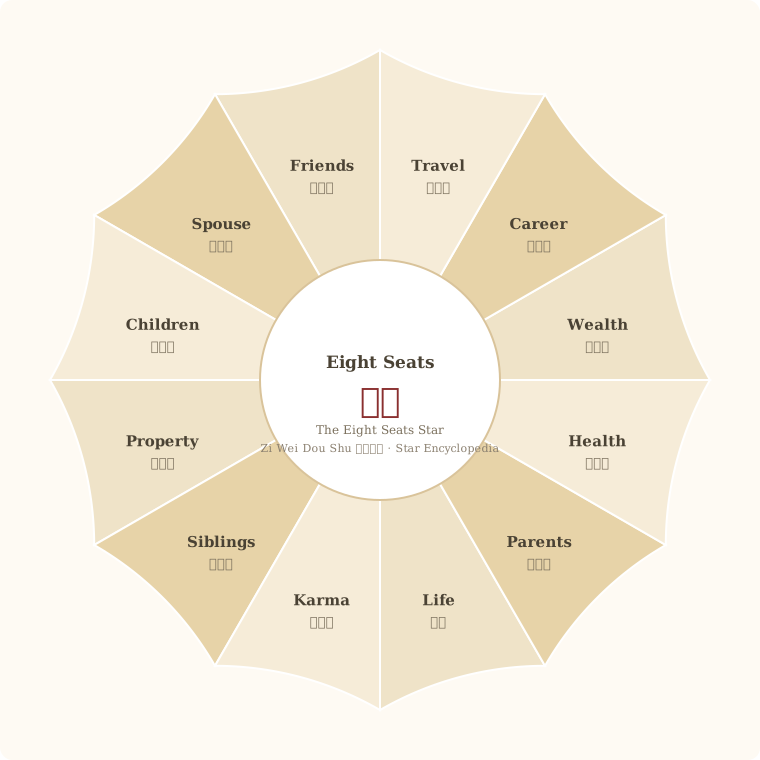
Eight Seats in the Twelve Palaces
| Palace | Meaning |
|---|---|
| Life | A strong sense of station and presence: this person knows where they sit and dresses the part. Ceremonious, spirited, and keenly aware of rank and grade. |
| Spouse | The tradition dislikes a lone Ba Zuo in the Spouse Palace; with the pair together, marriage is well seated and stable. With one star on each side, a period of separation is the classical pattern. |
| Wealth | Status economics: income that follows position rather than trading. The star favors nobility over wealth; the seat pays, but slowly. |
| Travel | Early departure is the classical note: leaving home young, working abroad, and building station in a new place. The pair together favors movement; a lone star meets isolation on the road. |
| Friends | Circle by rank: connections arranged by status and occasion. Esteem flows to the person who sits high; a lone star finds the circle cool and distant. |
| Career | Grade and office: management, organization, and refined positions of authority. Level rises with the main star; alone, it describes titles with limited traction. |
| Fortune | A late harvest of standing: honors, position, and the respect of institutions. The level of the seat still depends on the main star's strength. |
Key Star Combinations
- Ba Zuo + San Tai (三台八座): The classical pair: 'love union, dislike separation.' Together in the Life Palace or meeting across the three directions, they raise social standing and mark charge of refined organization. With the Purple Star (Zi Wei) in the Life Palace, the two stars together are counted most beautiful; apart, their force drops sharply.
- Ba Zuo + Purple Star (八座会紫微): The seat beside the throne: Ba Zuo is one of Zi Wei's two assistants, and with the Emperor it expresses rank with authority behind it - position, grade, and the charge of organization. The classical texts call this configuration one of nobility and official seals.
- Ba Zuo + Sun and Moon (八座会日月): Ba Zuo serves the Moon and San Tai serves the Sun, and together the pair adds brilliance to both lights, even in their weaker positions. The modern register adds public presence: the seat on the stage, the name in view.
- Ba Zuo + Left Assistant and Literary Star (八座会左辅文昌): The classical phrase 'honored to the Eight Seats' (paraphrase of the classical framework) names this meeting: the Left Assistant and the Literary Star together with rank produce high office and generous salary - and lose the pattern where harmful stars break the frame.
Common Questions
What exactly does the Eight Seats rank?
The tradition reads it as the grade of position - the level of office, the ceremonial seat, the station that a title confers - and adds that the grade corresponds in flavor to the branch number of the palace it occupies. All of it still waits on the main star: a strong main star makes the seat real, a weak one leaves only the title.
How is Ba Zuo placed in the chart?
Ba Zuo is a day-based star: begin at the palace of the Right Assistant (You Bi) as the first day of the lunar month and count backward counterclockwise to the birth day, where the star lands. It is anchored to the birth day, not the year, and its meaning depends on the main star sharing its palace.
Why do the texts say these stars love union and dislike separation?
Because Ba Zuo and San Tai are a pair: together, or meeting across the three directions, they raise standing and support the main stars; alone, their force is small. The classical texts add specific notes - leaving home early, poor reception abroad, isolation - and with one star in the Life and the other in the Spouse Palace, a marriage separated for a time.
Related Stars
Explore how Eight Seats works with other stars: