Core Attributes
| Chinese | 天福 |
|---|---|
| Pinyin | Tian Fu |
| English | Heavenly Blessing |
| Archetype | The Blessing |
| Category | Minor |
Personality & Temperament
The Heavenly Blessing is exactly what its name claims: fortune granted from above. The classical text describes a person who is optimistic, honest, and warm - generous to a fault, quick-tempered but quick to recover, helpful to the point of meddling, yet arranging that meddling so well that people thank them for it. They love travel, movement, and a well-decorated home, and they enjoy life with a whole heart.
Its classical role is assistant to the Heavenly Unity (Tian Tong), the major star of natural joy: with Unity it promises double fortune and long life, and in the Fortune Palace it means a life that knows how to be happy. It works equally well with the Heavenly Longevity star, and the tradition says it is auspicious in all twelve palaces, even in age and year limits. It is also a mid-life star: its full expression belongs to the second half of life.
The shadow of blessing is complacency. A star of ease can describe someone who enjoys comfort more than they earn it, who is lazy about what does not delight them, and who relies on lucky breaks - the text names luck by chance outright. When the main star is weak or harmful, the blessing flattens into passivity: fortune that cushions rather than builds. Comfort, without effort, becomes its own cage.
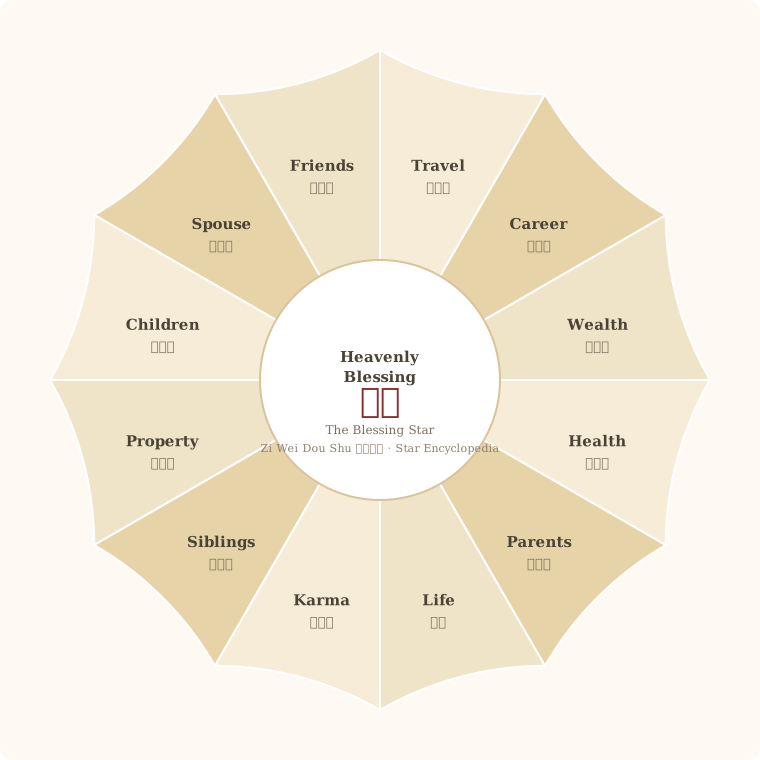
Heavenly Blessing in the Twelve Palaces
| Palace | Meaning |
|---|---|
| Life | A warm, optimistic presence with a fortunate face - someone people instinctively like and trust. Enjoys life openly; can be impatient and lazy about anything that does not please. |
| Spouse | A marriage with warmth and luck - an early marriage in classical terms, a harmonious partner, help that arrives in good time. The bond is generous rather than intense. |
| Wealth | Not a money-making star: the tradition says blessing stars bring wealth indirectly, through favor and promotion. With the Prosperity Star it describes finances that flow naturally - generous, comfortable, rarely anxious. |
| Health | Generally a resilient reading: enjoyment and rest protect the body. The caution is indulgence - pleasure that becomes excess in diet, drink, or laziness. |
| Friends | Surrounded by people who like them; generous with help and favors. Friendships are easy and warm, though the Blessing can attract friends who lean on that generosity. |
| Career | Work that is pleasant, well-rewarded, and protective of the person in it. Promotion tends to arrive through goodwill and patronage; by middle age the career reaches its comfortable plateau. |
| Fortune | The classical favorite: with Heavenly Unity in the Fortune Palace, this is the placement of real contentment - happiness, longevity, and the ability to rest well. |
Key Star Combinations
- Tian Fu + Heavenly Unity (天同天福): The classical pairing of the Blessing with its major star: fortune and longevity together, and in the Fortune Palace, a life that genuinely knows how to be happy. The text calls it the best seat for the Blessing - joy doubled, worry halved.
- Tian Fu + Heavenly Longevity (天福天寿): Blessing meets longevity: two minor stars reinforcing each other into a reading of long life with ease - health, comfort, and years enough to enjoy both. The tradition says this pairing increases the auspicious, and it sits well in the Life, Fortune, and Health Palaces.
- Tian Fu + Prosperity Star (天福禄存): Both stars describe wealth that comes naturally; the text compares them: the Prosperity Star is cautious and forceful, the Blessing generous but lighter. Together they balance - one guards the money, the other enjoys it. A comfortable, stable financial reading.
- Tian Fu + Heavenly Officer (天官天福): Rank and fortune arrive together: the Officer supplies position, the Blessing the favor that makes office pleasant. Classical texts group both among the noble minor stars and say they bring promotion, trust from superiors, and rewards that match effort.
Common Questions
Does the Heavenly Blessing mean wealth?
Not directly. The classical tradition explicitly groups the Blessing with the noble stars that do not directly produce money - it works through favor, promotion, and being trusted. Wealth follows when the wealth palaces are strong or the Prosperity Star joins in; on its own, the Blessing describes comfort and enjoyment more than riches.
Why is it called a mid-life star?
The text says the Blessing develops only after middle age. Its fortune matures slowly: early life may be ordinary, and the rewards - comfort, reputation, ease - accumulate through the second half. It is a patient star: the rewards arrive in the second half, to those who keep living well.
How is the Heavenly Blessing placed?
By the year stem: You in Jia years, Shen in Yi, Zi in Bing, Hai in Ding, Mao in Wu, Yin in Ji, Wu in Geng, Si in Xin, Wu in Ren, and Si in Gui. Stem-anchored, it never moves within a chart - and as a minor star, its effect still depends on the main star sharing its palace.
Related Stars
Explore how Heavenly Blessing works with other stars: