Core Attributes
| Chinese | 天德 |
|---|---|
| Pinyin | Tian De |
| English | Heavenly Virtue |
| Archetype | The Virtue |
| Category | Minor |
Personality & Temperament
Heavenly Virtue is classed among the resolving stars: the tradition calls it the star that presses down misfortune and the deliverer, a mark of blessing accumulated through good deeds. People with Tian De in the Life Palace are described as kind, fair, and quietly intelligent — generous without display, honest without harshness, and drawn to people of good character. The classical reading is that they carry a kind of moral gravity: others trust them, groups form around them, and their projects tend to succeed because they act in ways that are easy for others to support. The texts call this the appearance of divine protection — not exemption from hardship, but a pattern in which the worst passages open late or close early. Tian De also acts as a solvent on other stars: it softens harsh configurations, cools the peach-blossom stars, and dissolves petty misfortunes.
The shadow side is subtler: virtue that becomes dependence on luck. The tradition notes that the protected life can breed complacency — relying on fortune's kindness instead of building one's own defenses. The star's own prescription is the cure: accumulate hidden good deeds (积阴德), and the protection holds. In plain terms, the star describes a character that generates goodwill — and goodwill is practical protection in a world run by people.
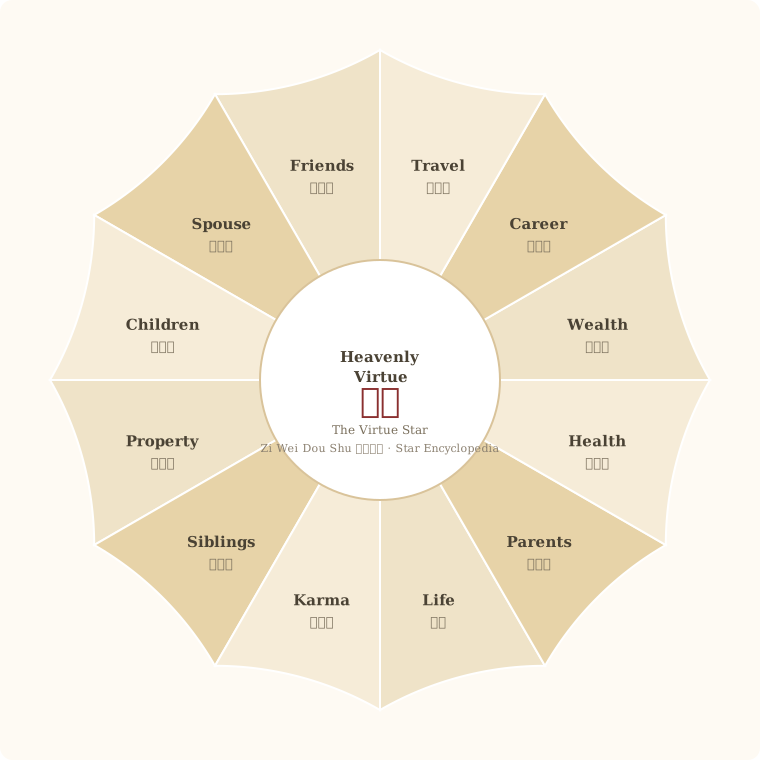
Heavenly Virtue in the Twelve Palaces
| Palace | Meaning |
|---|---|
| Life | Kind, fair, and quietly trusted: others sense a person of good character. Projects tend to succeed with unexpected help; hardship arrives softened. The challenge is not to mistake protection for invincibility. |
| Spouse | A kind, faithful marriage with real mutual support. Conflicts resolve faster than they escalate; both partners feel the relationship is blessed. The Virtue star keeps the marriage steady even when other stars stir. |
| Wealth | Money moves with the help of others: honest partners, timely introductions, fair returns. Gains are rarely dramatic but rarely lost. The tradition says wealth under the Virtue star is safest when earned and shared. |
| Health | Good recovery: illness, when it comes, tends to be minor or slow to take hold. The tradition reads Tian De here as a protective presence — best paired with sensible habits rather than tested. |
| Travel | Safe journeys and lucky encounters abroad: help arrives in unfamiliar places, and misfortunes on the road tend to be averted. Travel often carries purpose — charity, study, or pilgrimage. |
| Friends | Loyal, decent company: friends who appear when needed and genuinely wish the person well. The circle is honest rather than large; Tian De filters out much of the noise. |
| Career | A career that runs smoother than average: fewer obstacles, helpful superiors, chances that appear at the right moment. Suits service, care, education, and any role where trust is the currency. |
Key Star Combinations
- Tian De + Xian Chi (天德咸池): The classical pairing that converts charm into craft. Heavenly Virtue steadies the Salty Pool's magnetism: attraction becomes artistry, charisma gains discipline, and the peach blossom's shadow — distraction, entanglement — is largely suppressed. The tradition records that talent refined this way wins genuine admiration. It is the most cited remedy in the old texts for a strong peach-blossom star.
- Tian De + Jie Shen (天德解神): Two resolving stars together. Jie Shen, the Deliverer, unties the knots of small misfortunes — the petty harms of minor adversity stars — and Tian De presses down the larger ones. The combination is the strongest minor-star shield in the chart. The classical caveat applies: the shield is proportional. It cannot dissolve the weight of major stars in crisis, only blunt it and buy time.
- Tian De + Tian Xing (天德天刑): Heavenly Punishment is the month-based star of consequence — discipline, law, karmic debt. Heavenly Virtue does not erase it; it civilizes it. The combination describes consequence that lands as lesson rather than ruin: legal troubles that resolve, injuries that heal, debts that are paid and closed. The tradition reads it as the difference between being corrected and being destroyed.
- Tian De + Tian Liang (天德天梁): Tian Liang is the major star of protection and rescue. With Heavenly Virtue it forms a double guardian: a chart that seems to attract help at the last moment — the missed flight, the late diagnosis, the canceled plan that was actually a rescue. The shadow is over-protection: rescue can become a habit that prevents the person from learning to swim.
Common Questions
Does Heavenly Virtue guarantee good luck?
No — it describes a pattern of protection, not an exemption from life. The classical tradition reads Tian De as blessing earned through character and good deeds: hardship arrives softened, misfortunes resolve, and help appears at the right moment. But the texts are explicit that it is a minor star: it buffers, it does not override. A major adversity configuration still asks for care; Tian De is the reason the outcome tends toward the milder end.
What does it mean to accumulate hidden virtue?
Hidden virtue (阴德) is the traditional concept behind Tian De: good done without witnesses or expectation of return. The classical texts advise people with this star to keep doing exactly that — generosity, fairness, quiet help — because the protection is understood to renew itself through conduct.
Related Stars
Explore how Heavenly Virtue works with other stars: