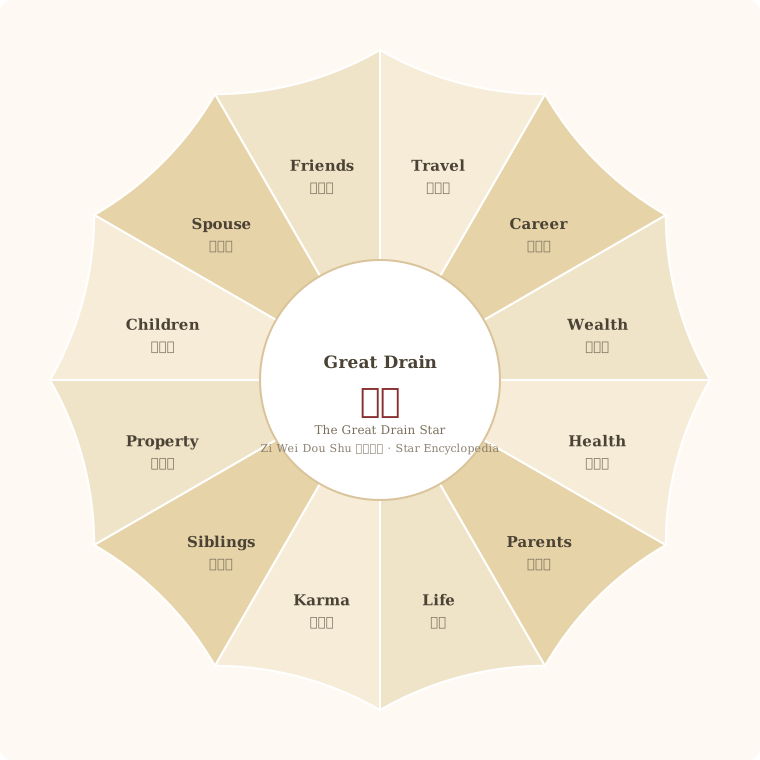
Core Attributes
| Chinese | 大耗 |
|---|---|
| Pinyin | Da Hao |
| English | Great Drain |
| Archetype | The Great Drain |
| Category | Cycle Deity |
What Great Drain Means
The Great Drain is placed one palace after the Illness Charm in the fixed sequence that begins from the Prosperity Star (Lu Cun), stepping forward for Yang men and Yin women and backward for Yin men and Yang women. Within the cycle it is nicknamed the Heaven Drain (Tian Hao), the larger sibling of the Small Drain, which is called the Earth Drain. The star governs loss on a visible scale: money that departs in large pieces, property lost or stolen, ventures that fail after investment, progress blocked at the worst moment. Old texts say it is unfavorable in every palace and especially disliked in the Life and Wealth palaces, where it can describe draining family resources, failed ventures, or being victimized by theft. They also attach two specific warnings: with peach-blossom stars it warns of losses tied to romance, and in yearly readings it has been traditionally linked to home matters, one classical line even advising that renovations be settled before the year turns. Its force is the strongest of the cycle's dark six, yet it remains a cycle deity: the classical textbooks repeat that this group only colors the reading, and that the main stars and Four Transformations set the actual scale. A strong wealth pattern turns the Great Drain into a large but survivable expense; a weak one makes it a genuine warning to protect assets.
Great Drain in Practice
In practice the Great Drain marks the palace where the budget needs armor. In the Wealth Palace it favors conservative cash management: no guarantees, no lending, no speculative commitments in that year; in the Career Palace it warns of investments or expansions that outrun their returns; in the Property Palace it cautions about repairs, disputes, or purchases with hidden costs. Classical texts add that with peach-blossom stars in the Spouse Palace, relationship-driven spending deserves attention. The shadow reading is not limited to money: the star also drains time and momentum, so projects should be scheduled with slack. The practical posture is defensive and simple: verify before paying, insure what matters, and keep major expenses reversible when possible.
Key Star Combinations
- Great Drain + Small Drain (大耗小耗): The two drains of the cycle in the same area: small steady leaks plus one large loss. Old texts recommend strict budgeting, no lending, and no guarantees for the palace concerned; strong main stars shrink both to manageable expenses.
- Great Drain + Sky Void or Earth Robbery (大耗天空地劫): Depletion with dissolution, the classic pattern of money that comes and vanishes. The reading favors holding cash, avoiding speculative instruments, and reviewing joint accounts; it describes instability rather than disaster when the main star is well placed.
Common Questions
Is the Great Drain a catastrophe star?
No. It is the strongest of the cycle's dark stars but still a light deity: its classical role is coloring the reading, not deciding it. With strong main stars the loss stays survivable; with weak stars it becomes a serious caution to protect assets.
How is it different from the year-deity Great Drain?
Both are called Da Hao, but this one steps from the Prosperity Star (Lu Cun) in the Doctor cycle, while the year-deity Great Drain (Da Hao Year) is placed by the year branch. Textbooks call the year version lighter and better suited to monthly and daily readings.
Related Stars
Explore how Great Drain works with other stars: