Core Attributes
| Chinese | 天喜 |
|---|---|
| Pinyin | Tian Xi |
| English | Heavenly Joy |
| Archetype | The Celebration |
| Element | Yang Water |
| Category | Minor |
Personality & Temperament
The Heavenly Joy describes a bright, sociable, and optimistic temperament. The person tends to smile easily, enjoys crowds and celebration, and gives help generously; the classical profile adds that helpers return the favor, so good deeds often come back as recognition and invitations. The star is said to bring news that arrives just in time, a promotion, a proposal, a recovery, which is why older texts call it a refuge star, one that dissolves tension around it.
In the chart it works as the festive counterpart of the Red Phoenix: where the Phoenix creates attraction, the Heavenly Joy brings the celebration that follows, engagement, wedding, childbirth, housewarming, or public honor. Its energy is social, outward, and event-driven.
The shadow appears in quieter forms: a person who needs external milestones to feel alive, who overextends helping others celebrate their own lives, or who chases busy social calendars because stillness feels empty. Classical texts also note that the same cheerful temperament can grow lonely in later years, once the celebrations thin out. When it meets the Solution Star (Jie Shen) or the Emptiness stars, a joy that seemed certain can dissolve at the last moment, a reminder that even good news is a tendency, not a guarantee.
Heavenly Joy in the Twelve Palaces
| Palace | Meaning |
|---|---|
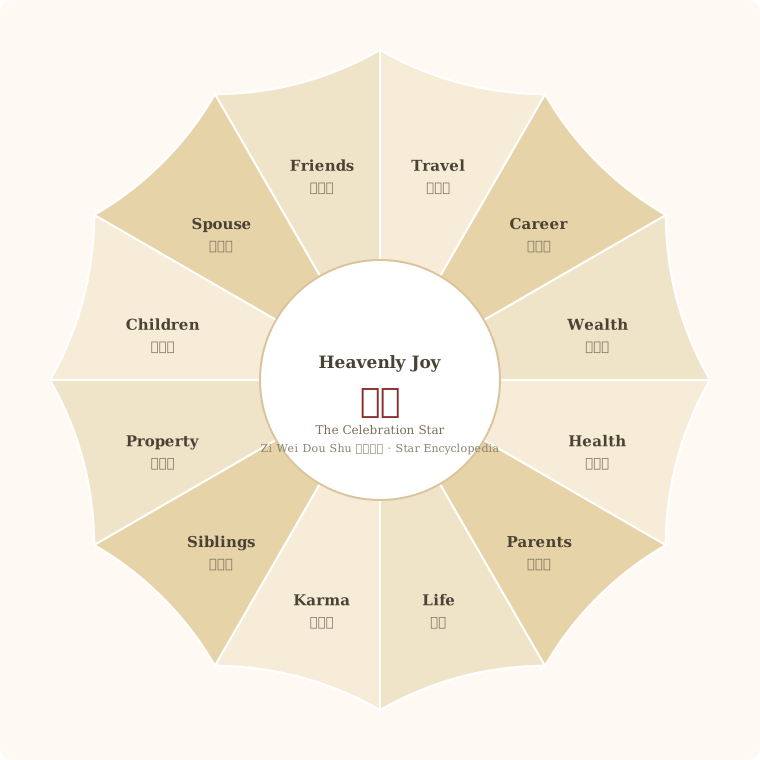
| Life | A cheerful, well-liked person with good fortune in requests: jobs, studies, and applications tend to move quickly. Early years bring favor from elders, and the person is often praised for generosity. |
| Spouse | Early engagement and a marriage that feels blessed or well timed. The classical reading says help arrives from outside - a matchmaker, a family introduction, or fortunate timing - so the union often begins with celebration. |
| Children | Leans toward sons in the classical reading, toward children who bring joy and good news. Parenthood milestones tend to be prominent, well celebrated events. |
| Wealth | Income tied to happy occasions, celebration services, gifts, hospitality, and goodwill. When Hua Lu or the Treasury stars join, prosperity arrives with a festive flavor - what older texts call joy-money. |
| Travel | Auspicious journeys, trips tied to festivals or family gatherings, and pleasant news received away from home. Travel itself often becomes a source of joy rather than strain. |
| Career | Announcements, promotions, and public recognition arriving in well-timed waves. Work in celebration industries, events, or customer-facing service suits the star's outgoing nature. |
Key Star Combinations
- Heavenly Joy + Red Phoenix (天喜红鸾): The full celebration axis. Courtship in one palace and celebration in the other create the strongest marriage-and-joy signature among the minor stars. Years that activate both often bring engagement, marriage, or childbirth, and even outside events, the pair raises popularity and festive luck in the chart.
- Heavenly Joy + Solution Star (天喜解神): A classical caution: the Solution Star dissolves, and a joy that seemed certain can fall through at the last moment, a canceled wedding date, a delayed announcement, or a blessing that arrives awkwardly. The effect is rarely destructive, but it reminds the reader that celebration is timing, and timing can shift.
- Heavenly Joy + Hua Lu or Treasury stars (天喜禄存): Joyful prosperity: income and good fortune arriving through happy events and goodwill. The classical texts call this celebration money, wealth that comes with people and occasions rather than through grinding effort, and it tends to arrive in bursts tied to milestones.
Common Questions
Does the Heavenly Joy guarantee marriage or childbirth that year?
No. The star describes celebratory timing, and celebration takes many forms: graduation, promotion, a new home, a wedding, a birth, or simply a season of good news. Since the star returns by placement roughly every twelve years, it cannot mean the same event every time. The reader looks at the palace, the main stars, and the yearly chart to see which kind of joy is being described.
Why is the Heavenly Joy always opposite the Red Phoenix?
Because they are one axis. The Red Phoenix governs attraction and courtship, while the Heavenly Joy governs the celebration that follows, and the two palaces always mirror each other. The pair covers the arc from meeting to milestone, which is why classical texts treat them as two halves of a single romance-and-joy signature.
What does one joy breaks three harms actually mean?
It is the classical formula for the Heavenly Joy's relieving quality: a visible celebration, a wedding, a birth, or public good news, is said to dissolve several sources of tension at once. In practice it reads as a pattern of reprieves and well-timed good events, not a magic guarantee, and the size of the relief still depends on the main stars around it.
Related Stars
Explore how Heavenly Joy works with other stars: