Core Attributes
| Chinese | 天哭 |
|---|---|
| Pinyin | Tian Ku |
| English | Sky Cry |
| Archetype | The Mourner |
| Category | Minor |
Personality & Temperament
The Sky Cry is a feeling star. The classical description is unsparing: melancholy, brooding, tearful, pessimistic, easily moved, lonely, and moody, with thin bonds to relatives and a face that carries a bitter gourd. It is the star of weeping and mourning in the old language; in modern terms it describes a person who feels loss and grief with unusual depth, and who processes sorrow slowly.
But the tradition immediately qualifies this: the harsh nature only appears when harmful stars join it - without them it means few smiles, nothing more, and with auspicious stars even that fades. Better still, when the main star in the palace is strong, the Cry works backwards: the text says it becomes a cheerleader and can bring fame. Emotional depth, channeled, is the raw material of artists, mourners, comforters, and performers.
Its shadow is the gravity itself: a mind that rehearses loss, expects disappointment, and can drag others into its weather. The classical warning concerns age and year limits, when the Cry meets the mourning cluster - Sky Void, Robbery, Emptiness, Shadow Harm, Funeral Gate, White Tiger. Then the pattern describes bereavement and setbacks. The modern reading keeps the same shape: grief shows up in these years, and it goes better for people who honor it instead of suppressing it.
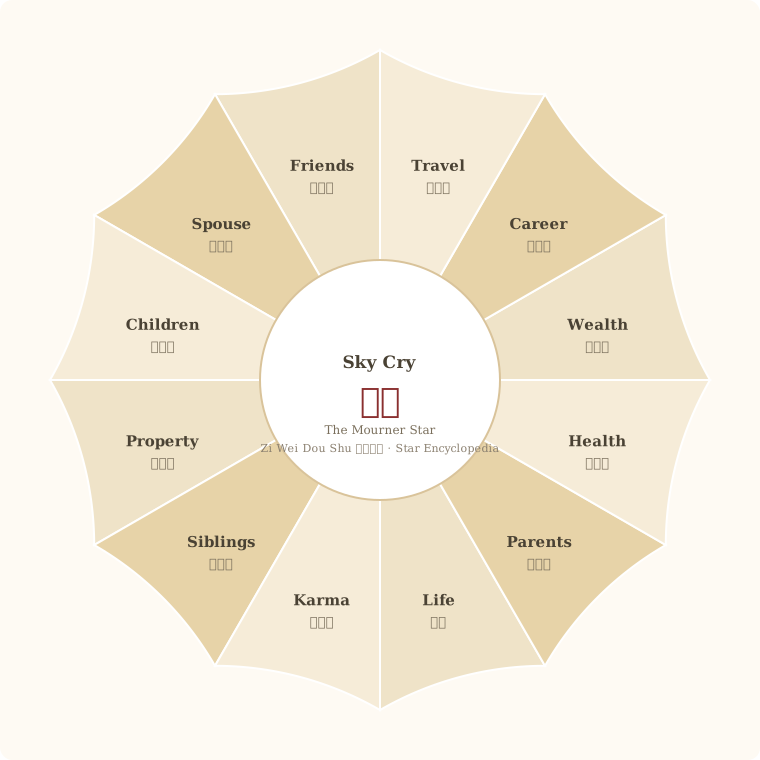
Sky Cry in the Twelve Palaces
| Palace | Meaning |
|---|---|
| Life | A serious, sensitive presence; melancholy by nature, easily moved to tears, pessimistic in hard times. Without harmful stars it means few smiles; with a strong main star, depth becomes expressiveness. |
| Spouse | The classical note: with the Sky Void, couples experience discomfort and falsehood - emotional distance, or a bond that looks better than it is. Strong main stars or the Prosperity Star and Heavenly Horse dissolve most of the strain. |
| Children | The mourning star softens here: worry about children, over-protectiveness, deep emotional investment. Classical warnings of loss apply only when harmful stars join it. |
| Health | Sorrow takes a physical shape: tears, tension, stress-related ailments, grief carried in the body. Mild without harmful stars; rest and expression are the classical remedies. |
| Travel | Journeys clouded by homesickness or bad news from home; travel connected with mourning and family duty in the old reading. With auspicious support, simply journeys of melancholy beauty. |
| Career | Work that feels joyless - duty performed under a heavy sky. Careers build slowly with the Cry at the helm, but with strong main stars the same gravity produces gravitas. |
| Fortune | The inner life is the fortune: deep feeling, rich inner weather, capacity for compassion. Material luck is neutral; the star's gift is sincerity, its cost is sorrow. |
Key Star Combinations
- Tian Ku + Tian Xu (天哭天虚): The mourning-and-void pair. In the natal chart the pair is quiet; in age and year limits, with harmful stars or transformations, it describes setbacks, losses, and mourning - the classical texts are blunt about burial clothes. The pair dissolves when the main star is strong or the Prosperity Star and Heavenly Horse are present.
- Tian Ku + Great Gate (天哭巨门): The Cry assists the Gate's darkness: disputes, slander, and sorrow feed each other. The classical text says this combination brings repeated setbacks and mourning in limiting years. Modern framing: harsh words and wounded feelings, where the remedy is care in speech and distance from rumor.
- Tian Ku + strong auspicious main star: The reverse reading the tradition preserves: when the main star is strong and auspicious, the Cry works as a cheerleader and can bring fame. A great Sun, Purple Star, or similar anchor turns depth of feeling into public presence - the performer, the speaker, the person whose sincerity moves rooms.
Common Questions
Is the Sky Cry always bad?
No. The classical text is explicit that the Cry's harmful nature only appears when harmful stars join it; without them it means few smiles, nothing more, and with auspicious stars even that fades. When the main star is strong, the same emotional depth can become a gift - the text says the star then works as a cheerleader and can bring fame. Like all minor stars, it has no independent voice: the main star does the writing, the Cry only adds the tone.
Does the Sky Cry mean someone in the family will die?
The classical language is literal - mourning clothes, funerals, bereavement - and in its own time it was read that way, especially when the Cry met the mourning cluster in age or year limits. The modern reading stays within the same shape without the prophecy: the star describes depth of grief, sensitivity to loss, and a life likely touched by caregiving, mourning, and death as real events - as every life is. It is a pattern of feeling, not a prediction about any particular family member.
Related Stars
Explore how Sky Cry works with other stars: