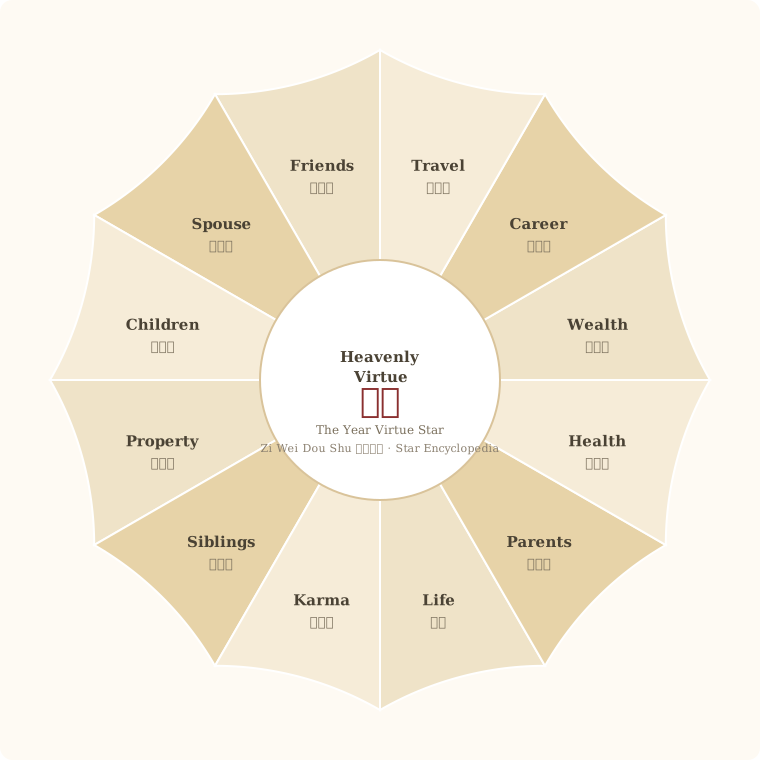
Core Attributes
| Chinese | 天德 |
|---|---|
| Pinyin | Tian De |
| English | Heavenly Virtue |
| Archetype | The Year Virtue |
| Category | Year Deity |
What Heavenly Virtue Means
The name 天德 means “heavenly virtue,” and the classical framework assigns it transforming ill fortune into good (化凶为吉), adding that it glorifies happy events (喜事增荣): the year's sector of mercy and elevation. Where the star sits, setbacks lose weight and celebrations gain luster. The same name also appears as a natal minor star in the birth chart; here it belongs to the annual sequence and must be read as a Year Deity, not a fixed star. Heavenly Virtue is tenth in the sequence, nine palaces after the Grand Duke in the forward branch order; for a Zi (Rat) year it occupies You, following White Tiger. What it governs is protection — errors forgiven, crises downgraded, recovery accelerated — and the merit side of life: charity, faith, and good deeds that return as favor. Its shadow is complacency, the belief that protection makes preparation unnecessary. The tradition keeps it a modifier: virtue softens and brightens, but the palace's stars still set the tone.
Heavenly Virtue in Practice
Heavenly Virtue reads as the mercy sector of the chart: in Health, quick recovery and good care; in Career, forgiveness of mistakes and second chances; in Wealth, compensation and restitution; in Marriage, reconciliation. The mercy is real, but it favors the prepared. With Dragon Virtue, the two virtuous stars bracket the risk sector and double the relief; with White Tiger near, hazard is tempered. With auspicious main stars the blessings turn visible — promotions, weddings, honors; with adversity stars it still cushions, converting disaster into difficulty.
Key Star Combinations
- Heavenly Virtue + Dragon Virtue (龙德): The cycle's two virtuous stars together: relief in two sectors, honors doubled, and the year's hardest palace supplied with exits. The tradition reads this pairing as the strongest benign signature in the sequence.
- Heavenly Virtue + White Tiger (白虎): Hazard tempered by grace: the sharpest risk in the cycle sits beside its softener. Danger remains real but loses its edge, and recovery, when needed, comes quickly.
Common Questions
Is this the same as the natal Tian De (天德) minor star?
It shares the name with a natal minor star, and this encyclopedia documents them separately: tian-de for the birth-chart minor star, tian-de-year for the Year Deity. The year-deity version belongs to the annual branch sequence and is re-anchored each cycle, so its reading follows the year-deity logic, not the minor-star logic.
Does Heavenly Virtue guarantee a good year?
No — it is a modifier, not a promise. It reduces harm, speeds recovery, and adds grace to good events, but the palace's main star and transformations set the baseline. It is the year's softest cushion, not its engine.
Related Stars
Explore how Heavenly Virtue works with other stars: