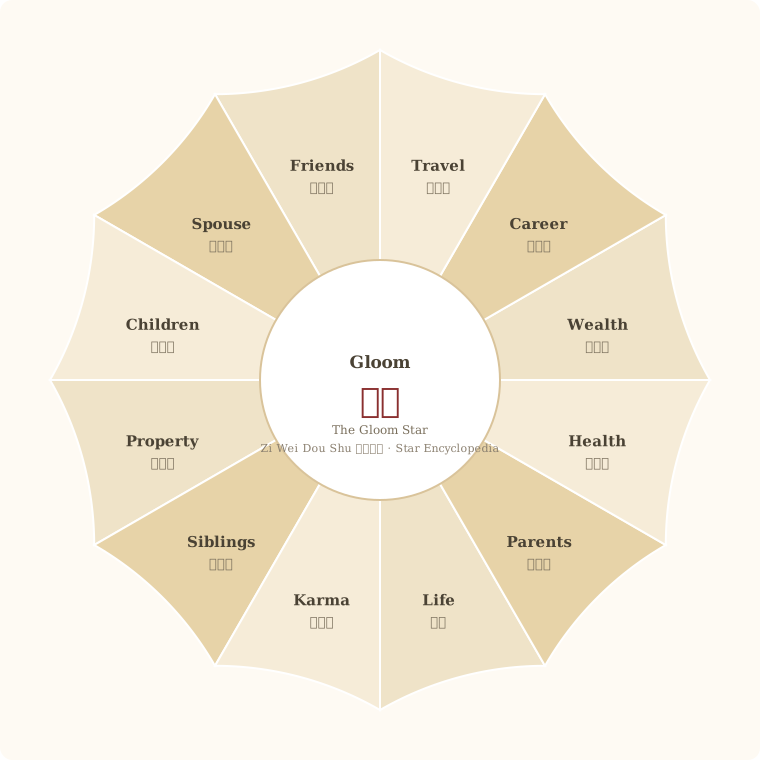
Core Attributes
| Chinese | 晦气 |
|---|---|
| Pinyin | Hui Qi |
| English | Gloom |
| Archetype | The Gloom |
| Category | Year Deity |
What Gloom Means
The name 晦气 literally means “murky qi.” The classical framework describes it as going against one's wishes (相违背): plans bend away from intention, effort returns less than expected, and a dull, stagnating mood settles over the period. Older summaries assign it setbacks (波折), hidden drains (暗耗), and instability (不稳定) — friction rather than calamity. Gloom is second in the sequence, so it sits one palace after the Grand Duke in the forward branch order: for a Zi (Rat) year it occupies Chou. What it governs is the year's emotional weather and practical friction. In the palace it touches, expect slower progress, miscommunication, and the sense of being stuck. Its shadow is resignation — the real danger is not the setbacks but giving up early. The neutral reading is a calibration star: it asks for patience, buffers, and smaller commitments rather than for fear. Treat it as a thermostat, not a forecast: it reports the climate, while the main stars and transformations in the palace decide the temperature.
Gloom in Practice
When Gloom lands in the Wealth palace, readers flag cash-flow delays and impulse spending; in Career, stalled approvals and office politics; in Health, low-grade fatigue. The useful question is not “will this go wrong?” but “where should I build slack?” Because Gloom only colors a palace, a strong main star — especially Tian Tong, the Joy star — drains most of its weight, turning the year slow but safe. Pairing with Hua Ji strengthens the fog; pairing with Tian Kui or Tian Yue supplies helpers who clear it.
Key Star Combinations
- Gloom + Hua Ji (化忌): The fog densifies: worries loop, plans unravel in small ways, and the palace's domain feels heavy. The classical counsel is to shrink commitments, document everything, and refuse big decisions until the mood lifts.
- Gloom + Tian Kui / Tian Yue (天魁/天钺): Helpers appear exactly where progress stalls: a recommendation, a loan, a second opinion. The year still moves slowly, but the noble stars keep setbacks from becoming dead ends.
Common Questions
Does Gloom mean a bad year?
Not by itself. It marks friction, not failure. A palace's main star, the transformations, and the surrounding auspicious or adversity stars determine whether the friction stays minor. Many charts read Gloom as a merely slow year, one that rewards patience and planning.
Where does Gloom sit for someone born in a Rat (Zi) year?
The Grand Duke sits in Zi, and each following deity takes the next branch in order, so Gloom occupies Chou, one palace along in the branch sequence. The same logic extends to every birth year: Gloom always sits one palace after the Grand Duke.
Related Stars
Explore how Gloom works with other stars: