Core Attributes
| Chinese | 飞廉 |
|---|---|
| Pinyin | Fei Lian |
| English | Flying Star |
| Archetype | The Swift |
| Category | Cycle Deity |
What Flying Star Means
The Flying Star is placed one palace after the Memorial Star in the fixed sequence that begins from the Prosperity Star (Lu Cun), stepping forward for Yang men and Yin women and backward for Yin men and Yang women. It must not be confused with the Flying Locust (Fei Lian), a separate minor star written with a different Chinese character and placed from the Shen palace by the year branch. The name means flying swift and carries the energy of the wind: motion, haste, and things that come and go without warning. Its register is travel, changeable situations, and small misfortunes: rumors, minor lawsuits, damage to property, slander, and petty theft. It is said to dislike the Life, Body, and Fortune palaces and to sit more lightly in the Health Palace, where its restlessness is said to disperse harmlessly. Classical texts also attach a shopping theme to the star, impulsive buying, and warn that meeting the White Tiger (Bai Hu) intensifies its sharp edge. Its force remains that of a cycle deity: a background sign of instability rather than a promise of disaster, with the main stars setting the volume.
Flying Star in Practice
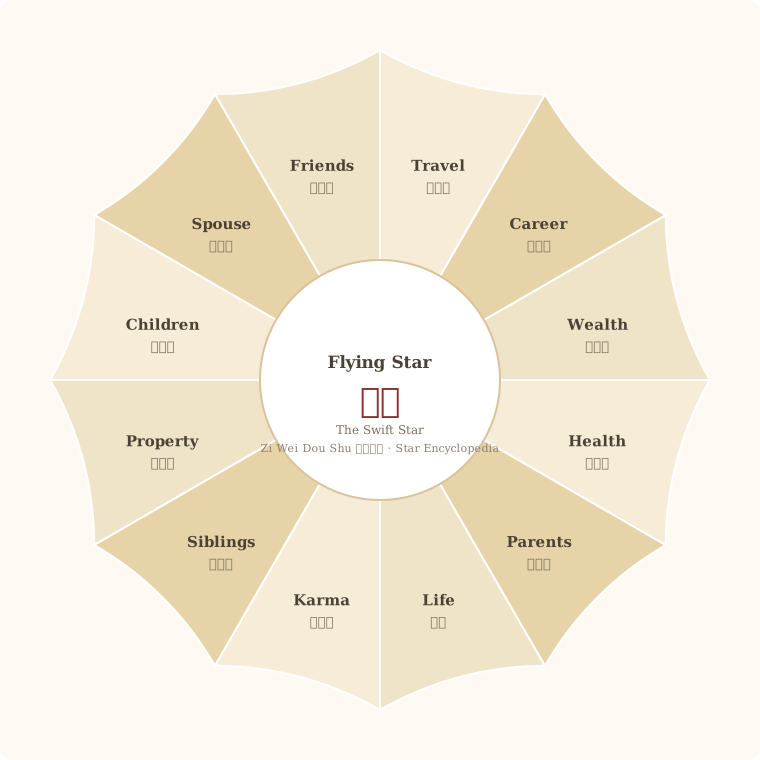
In practice the Flying Star reads as a period of motion and noise. In the Travel Palace it favors journeys but warns of hassle in transit, delays, lost luggage, misunderstandings; in the Career Palace it describes frequent changes, relocations, or gossip around a position; in the Friends Palace it warns of rumors and unreliable associates. The star's favorable angle is movement itself: with the Heavenly Horse (Tian Ma) or a well-placed Travel Palace, it supports mobility, trading, and jobs that require travel. The shadow angle is impulsiveness: buying on a whim, committing before checking, speaking before verifying. The practical habits are simple: double-check agreements, keep travel documents organized, and let rumors pass without answering them.
Key Star Combinations
- Flying Star + White Tiger (飞廉白虎): The classical warning pair: sharp, sudden trouble, accidents, disputes, damage, around the palace concerned. The remedy in the framework is caution in that specific area and prompt, documented handling of any dispute.
- Flying Star + Heavenly Horse (飞廉天马): Movement doubled. The pairing favors travel, trade, and relocation when the main stars are strong, and reads as restless instability when they are weak. Timing matters: under this pair, decisions made in haste tend to be revised.
- Flying Star + Flying Locust (飞廉蜚廉): The two stars share a sound but not a system: the cycle-deity Flying Star steps from Lu Cun, the minor Flying Locust from the Shen palace. When both appear in yearly readings, gossip and instability themes compound, a season for discretion.
Common Questions
Is the Flying Star the same as the Flying Locust?
No. The Flying Star (Fei Lian) belongs to the Twelve Doctor Deities and starts from the Prosperity Star (Lu Cun); the Flying Locust (Fei Lian) is a separate minor star written with a different character and placed from the Shen palace by the year branch. Different characters, different cycles, different readings.
Does it really mean calamity?
It marks small misfortunes and instability, rumors, petty loss, travel hassle, not major disaster. Classical texts keep it in the light-star tier, and with helpful main stars its effects shrink toward noise. Its practical message is caution and verification.
Related Stars
Explore how Flying Star works with other stars: