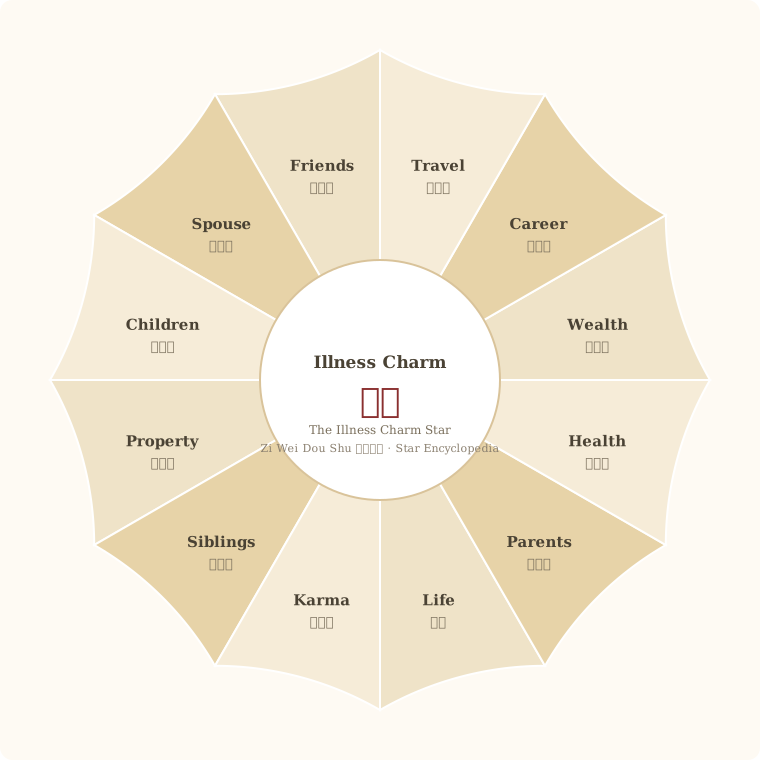
Core Attributes
| Chinese | 病符 |
|---|---|
| Pinyin | Bing Fu |
| English | Illness Charm |
| Archetype | The Illness Charm |
| Category | Cycle Deity |
What Illness Charm Means
The Illness Charm is placed one palace after the Joy Spirit in the fixed sequence that begins from the Prosperity Star (Lu Cun), stepping forward for Yang men and Yin women and backward for Yin men and Yang women. Its name means charm of illness, and its classical profile is low-grade and persistent rather than severe. The star governs two overlapping patterns: minor sickness and things that refuse to resolve. In the Life, Body, and Fortune palaces it is said to bring lingering health complaints or moods that dampen initiative; in yearly readings it warns of catching what is going around, especially when an adversity star or a transformation of obstruction (Hua Ji) shares the palace. The second pattern is procedural: a project tangled in red tape, a dispute that will not settle, a favor that comes with strings. Its force is light, as with all cycle deities. The textbooks place the Illness Charm in the unfavorable half of the cycle but rank its damage below the drains and the Ambush. With a strong main star and no Hua Ji, it reads as an ordinary flu or a slow bureaucracy; with weak stars, it deserves real attention to health and paperwork.
Illness Charm in Practice
In practice the Illness Charm is read as a season of care, not fear. In the Health Palace it supports regular checkups, rest, and preventive habits; the pattern is minor illness, not serious disease. In the Career Palace it warns of projects that stall in approvals or deadlines that stretch; the practical habit is early follow-up and written timelines. In the Fortune (Fu De) Palace it describes low spirits that pass with routine and rest. The reading sharpens only when the palace also carries Hua Ji or an adversity star; then the classical texts treat the charm as active and advise caution with health and documents in that specific year. Otherwise, the star's practical message is simple: rest when tired, and chase paperwork before it chases you.
Key Star Combinations
- Illness Charm + Illness (病符病): Two illness stars of different cycles: the Illness Charm of the Doctor cycle and the Illness stage of the Longevity cycle. When both fall in the health area of a yearly reading, old texts favor preventive care; the effect remains moderate unless Hua Ji or adversity stars join.
- Illness Charm + Transformation of Obstruction (病符化忌): The sharpest version of the star: Hua Ji activates the charm's entanglements, favoring health care, rest, and careful documents in that year. With a well-placed main star, it reads as a rough season rather than a disaster.
Common Questions
Does the Illness Charm mean serious disease?
No. Classical texts keep it in the light tier: minor sickness, slow recovery, nagging complaints. Its damage rises only with Hua Ji or adversity stars. The practical reading is preventive: rest, checkups, and clearing small matters early.
Is it the same as the year-deity Illness Charm?
The name is shared, but the placement differs: this Illness Charm steps from the Prosperity Star (Lu Cun) in the Doctor cycle, while the year-deity Illness Charm (Bing Fu Year) is placed by the year branch. Keep the two readings separate.
Related Stars
Explore how Illness Charm works with other stars: