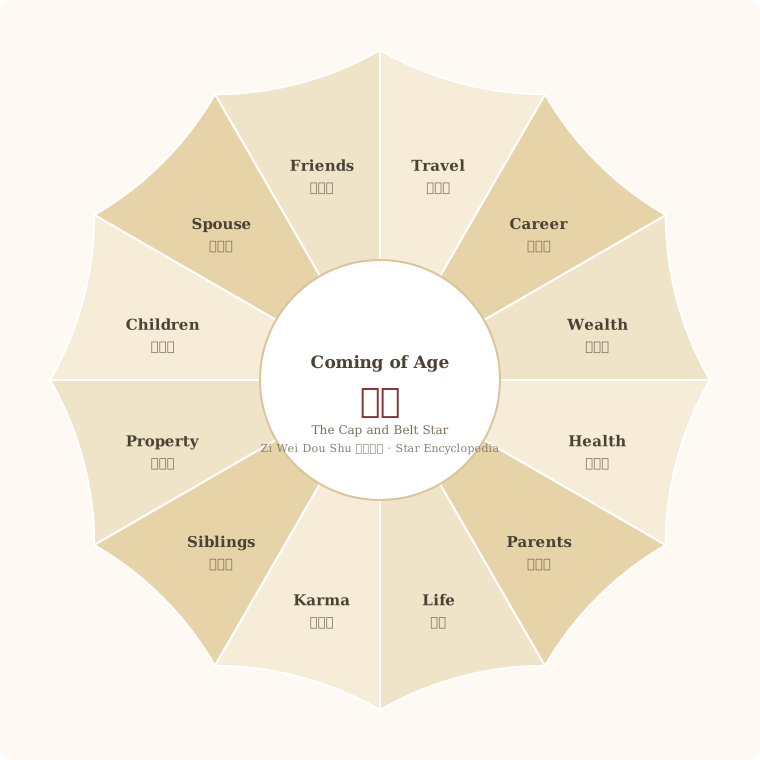
Core Attributes
| Chinese | 冠带 |
|---|---|
| Pinyin | Guan Dai |
| English | Coming of Age |
| Archetype | The Cap and Belt |
| Element | Wood |
| Category | Cycle Deity |
What Coming of Age Means
Coming of Age takes its name from the classical capping rite in which a young man received his ceremonial cap and belt, entering adult society with a new identity. In the Twelve Life Stages it is the third station, placed two palaces after Longevity along the fixed order anchored by the Five Elements Bureau (Water at Shen, Wood at Hai, Metal at Si, Earth at Shen, Fire at Yin), advancing forward for men and in reverse for women. The classical sources count Coming of Age among the four prosperous states together with Longevity, Official Post, and Imperial Peak, and list it among the auspicious deities; the Life palace is traditionally favorable here. What the stage governs is formalization: recognition, credentials, titles, and the first settled identity in society. Where Bath displays talent loosely, Coming of Age dresses it in ceremony: graduation, licensing, first employment, or any rite that turns potential into a stated position. The shadow side is the gap between the gown and the person: titles can arrive before substance, and a chart with weak main stars may show honors that remain formal. The stage colors whatever palace it occupies with dignity, expectation, and the weight of being seen as adult.
Coming of Age in Practice
In a Life palace, Coming of Age favors a dignified self-presentation, early honors, and a respect for institutions; with the Literary stars (Wen Chang, Wen Qu) it strongly supports examinations and academic recognition. In Career palaces it marks formal entry: the first post, the license, the promotion that is announced publicly. In decade cycles, palaces under this stage often coincide with milestone years: graduation, certification, marriage, or taking a title. With the Heavenly Beam (Tian Liang) it favors teaching, law, and institutions where rank is earned through service. The shadow appears when malefic stars crowd the palace: ceremony without substance, or status that costs more than it returns.
Key Star Combinations
- Coming of Age + Literary Star (Guan Dai + Wen Chang): The capping ceremony meets the star of letters: a strong signature for examinations, titles, and public recognition. Honors arrive through study and formal channels, and reputation is built on credentials.
- Coming of Age + Official Post (Guan Dai + Lin Guan): The formal chain from investiture to office: the Cap and Belt grants the title, the Official Post grants the seat of power. Together they describe a career that consolidates step by step, rank following rank.
- Coming of Age + Heavenly Beam (Guan Dai + Tian Liang): The elder's blessing on the rite of passage. Dignity and mentorship combine: favor teaching, law, and public service where the young are initiated into responsibility by those who came before.
Common Questions
How does Coming of Age differ from Official Post?
The Cap and Belt is the ceremony: the title, the gown, the formal entry into society. The Official Post is the position itself, the seat where authority is exercised. Classical order places the ceremony before the office, and both are counted among the prosperous states.
Is Coming of Age always auspicious?
It is counted among the four prosperous stages, but like every stage star it colors rather than decides. With strong main stars it supports honors and recognition; with weak or malefic company it can become hollow ceremony, titles without substance.
Related Stars
Explore how Coming of Age works with other stars: